The Financial Framework of Scottish Football’s Dominant Force
Celtic Football Club stands as one of the most culturally significant and historically decorated institutions in world football. Founded in 1887 by Brother Walfrid to alleviate poverty among Irish immigrants in Glasgow, the club has transformed over nearly one hundred and forty years into a commercially resilient enterprise while retaining its founding charitable principles.
In contemporary European football, maintaining competitiveness presents unique financial challenges for clubs operating outside the top five leagues (England, Spain, Italy, Germany, and France). The Scottish Premiership generates significantly lower domestic television broadcast revenue compared to the English Premier League. Consequently, Celtic’s board has long adopted a strict self-sustaining financial model focused on player trading, continuous UEFA Champions League participation, matchday income at a 60,000-capacity stadium, and commercial sponsorship agreements.
Unlike many European clubs relying on sovereign wealth funds or high-risk leverage, Celtic operates with negligible bank debt and substantial cash reserves. This structural stability enables the club to invest consistently in training infrastructure, scouting networks across Asia and South America, and squad development. However, maintaining this competitive edge requires constant diversification of commercial revenues beyond traditional ticketing.
Commercial Partnerships and the Growth of Digital Entertainment
Sponsorship deals form a vital pillar of Celtic’s annual operational budget. Over the decades, the club’s shirt sponsorship placements have transitioned through major industrial sectors — from local Scottish brewing companies and telecommunications firms to global digital entertainment brands.
Commercial sponsors view Celtic not merely as a domestic Scottish team, but as a global brand backed by an international diaspora spanning North America, Australia, Ireland, and East Asia. The globalization of football broadcast rights has aligned football clubs with digital entertainment sectors, including digital gaming, sports media applications, and global gaming operators.
Sponsorship Revenues and Digital Platform Integration
| Revenue Category | Primary Sources | Financial & Operational Impact |
| Matchday Operations | Ticket sales, corporate hospitality, food & beverage | Provides immediate cash flow; reliant on Celtic Park capacity |
| Broadcasting Rights | SPFL domestic rights, UEFA European competition distributions | UEFA prize money drives squad investment capabilities |
| Commercial Deals | Kit manufacturing (Adidas), main shirt sponsorship, official partners | Delivers multi-year guaranteed baseline revenue |
| Player Trading | Scouting young talent, developing, and selling to top-five leagues | Generates high capital returns to fund transfer reinvestments |
The commercial ecosystem surrounding elite sports increasingly overlaps with digital interactive services. Digital entertainment providers, including regulated online casinos, iGaming operators, and fantasy sports platforms, regularly establish marketing partnerships with European football clubs. These sponsorships deliver substantial guaranteed annual revenue, allowing teams like Celtic to maintain competitive wage structures while competing against wealthier continental rivals.
For supporters, the digital ecosystem offers varied ways to stay connected with football content during non-match days. While matchday attendance remains the cornerstone of Celtic culture, the international fan base often engages with sports trivia platforms, interactive streaming apps, digital gaming, and entertainment hubs during mid-week fixture breaks. This steady expansion into digital spaces ensures that global fan interest remains active throughout the calendar year, regardless of time zones.
The Global Fan Base and Matchday Atmosphere at Parkhead
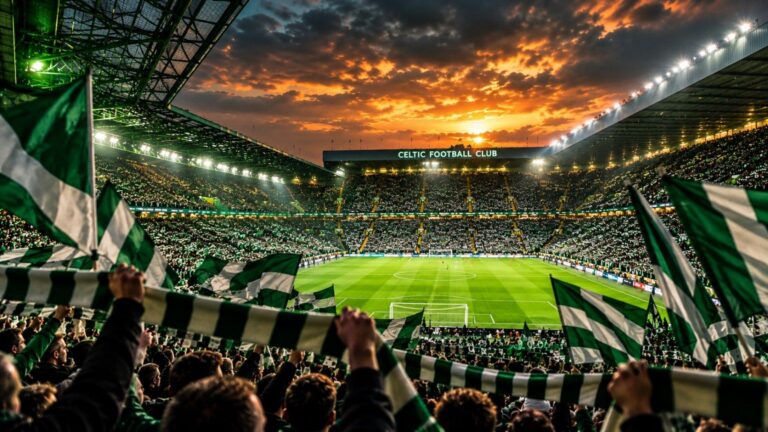
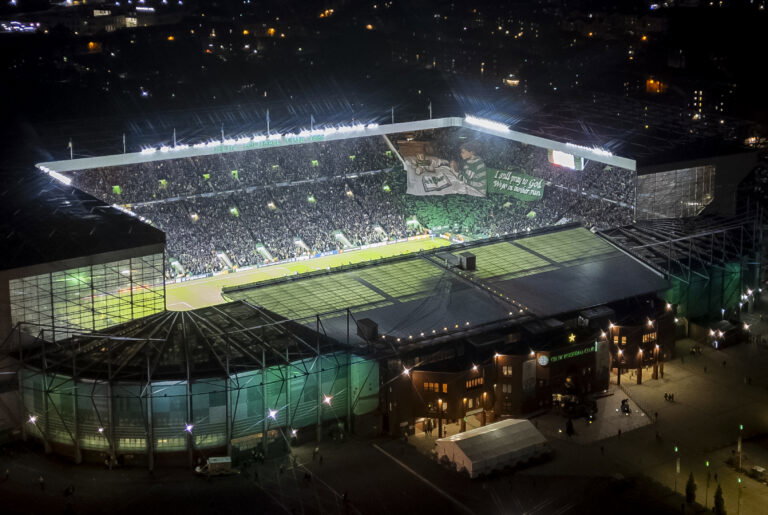
While commercial strategy secures financial health, the core identity of Celtic FC remains rooted in its matchday atmosphere at Celtic Park, known affectionately to supporters as “Paradise.” With a capacity exceeding 60,000, Celtic Park ranks among the largest club stadiums in the United Kingdom.
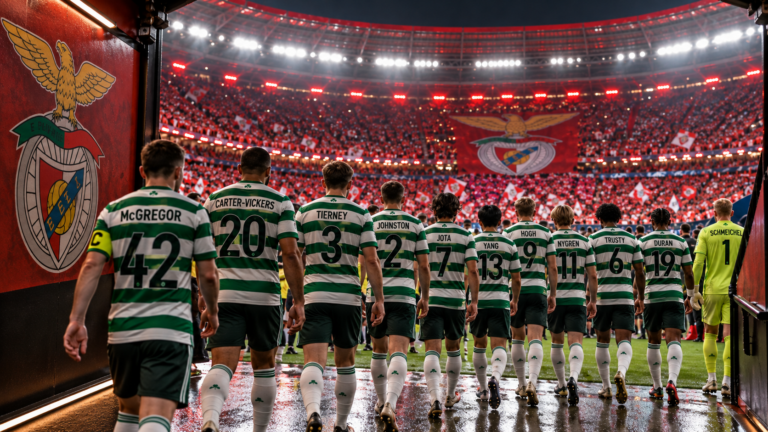
The atmosphere during European nights — particularly against major continental opponents — is widely recognized across the sport. Renowned figures throughout football history have cited the noise and collective singing of “You’ll Never Walk Alone” prior to kickoff as a unique spectator experience.
Key Elements of Celtic Supporter Culture
- The Founding Ethos: Established in 1887 to aid the poverty-stricken population of Glasgow’s East End, a charity tradition that continues today through the Celtic FC Foundation.
- The Irish Connection: Deep historical ties to Ireland, reflected in club symbolism, flags, traditional songs, and extensive supporter clubs across the island.
- International Supporter Clubs: Over 500 officially recognized supporter clubs operate worldwide, from North America and Europe to Australia and Japan.
- Tifo Displays and Vocal Support: Organized fan groups create visually striking full-stadium mosaic displays during high-profile matches.
For fans living in North America, Australasia, or Asia, attending games in person is a rare opportunity. Consequently, digital media, official club streaming channels (Celtic TV), and digital fan hubs serve as the primary bridge between distant supporters and the daily life of the club.
Player Trading as a Core Business Strategy
In addition to commercial sponsorships, Celtic’s financial viability relies heavily on an effective player recruitment and trading structure. The club operates within a strategic market position: acquiring promising talent from secondary leagues or overseas markets, offering high-level domestic competition and European exposure, and subsequently selling players to top-tier leagues for substantial profit margins.
Recent decades have demonstrated the success of this model. Players recruited for modest transfer fees have developed into elite performers before moving to major European leagues.
The strategy requires constant investment in global scouting operations. In recent seasons, Celtic expanded its recruitment focus into Asian markets, particularly Japan and South Korea, yielding high-performing international players who contribute both on the pitch and in expanding the club’s brand reach across Asian sports media.
Preserving Club Identity in a Changing Sports Economy
As global football grows increasingly commercialized, balancing commercial financial growth with community heritage remains a delicate priority for Celtic FC. Supporter groups actively participate in dialogues regarding club governance, ticket pricing, stadium safety, and the preservation of traditional club values.
The Celtic FC Foundation acts as the charitable extension of the club, directing funds raised from corporate partners, fans, and charitable events toward local community programs, food banks, and educational initiatives. This charitable work guarantees that despite the multimillion-pound reality of top-tier football, the club remains attached to the founding mission established by Brother Walfrid in 1887.
The future of Celtic Football Club relies on maintaining this dual identity. By combining disciplined corporate management, international commercial partnerships, and digital fan engagement with an unwavering commitment to its supporters and history, Celtic secures its status as both a competitive footballing power and a unique cultural institution.
Image Source: unsplash.com