The international break is still here and, as usual, that means rumours, speculation and endless conversations about what might happen next at Celtic.
Right now, one of the biggest questions is the future of Martin O’Neill.
Will he stay? Will he resign? Will he demand changes? Will the Celtic Board pricks finally realise that something has to change around the manager?
We still do not know.
But while we wait for an answer, the speculation about who could replace him has already started. Former Everton and Chelsea goalkeeper Asmir Begovic has suggested that Sean Dyche would be a good appointment for Celtic, praising his organisation, discipline and ability to get players working hard.
Niall Quinn has also suggested Roy Keane could consider putting his name in the hat.
So already we have Dyche, Keane, Kieran McKenna and all the usual names being thrown into the conversation.
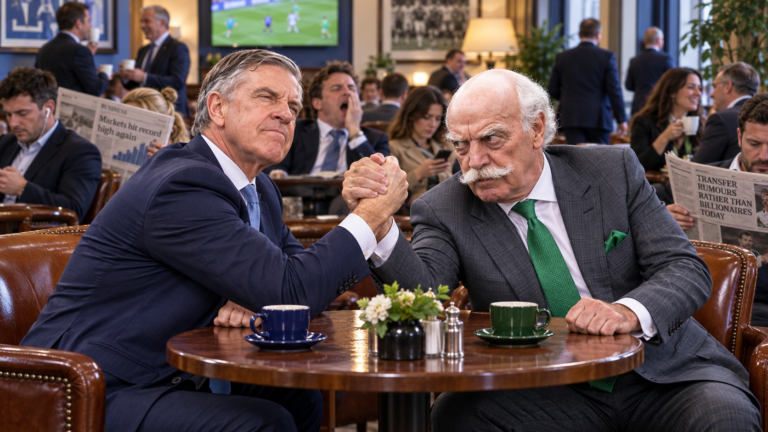
But I think we are asking the wrong question. The important issue is not simply who Celtic appoint next. It is what that manager walks into.
You can bring Sean Dyche to Paradise. You can bring Roy Keane. You can bring Kieran McKenna. You can bring practically any high-calibre manager you want. And this isn’t an article about the merits of any of them.
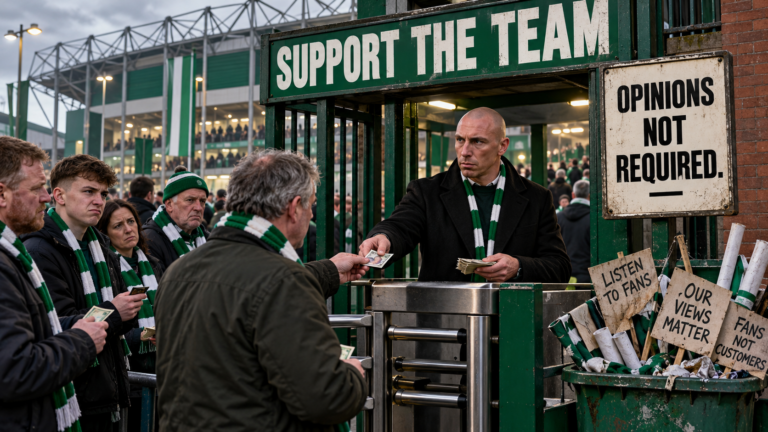
Because if the Celtic board pricks continue operating in exactly the same way, what exactly changes?
That is the part of this discussion which matters most to me. Celtic supporters have seen enough managerial changes now to understand that replacing the person in the dugout does not automatically solve the problems around him.
We watched Brendan Rodgers leave, return and eventually leave again. We watched Wilfried Nancy arrive and disappear almost as quickly.
Martin O’Neill came back into an incredibly difficult situation, delivered a league and Scottish Cup double and then signed a two-year contract.
Now, only months later, we are discussing whether he could walk away.
Something is fundamentally wrong with that picture. If O’Neill does leave, Celtic cannot make the mistake of believing another appointment fixes everything.
It will not. Not unless the structure around the manager changes too.
Imagine Celtic appoints one of these guys.
He arrives with his own coaching staff, his own methods, his own ideas about fitness, preparation, recruitment and how the team should play. Then what?
What happens when he discovers that the recruitment structure does not work the way he wants? What happens when players he identifies cannot be signed, decisions are made above his head or the football department simply does not match the way he wants to operate? What happens when the Board expects results while simultaneously restricting the tools available to achieve them?
Six months later, everyone will be asking why the change is not working.
That is exactly the cycle Celtic have to break.
And this is why I am not particularly interested in simply discussing names.
Dyche has his methods. Keane has his personality and his connection with Celtic. McKenna represents a more modern coaching approach. Other managers will bring other qualities. But Celtic should not be asking only, “Who can we attract?” They should be asking, “What environment are we creating for that manager to succeed?”
Those are completely different questions.
A brilliant manager can still fail inside a dysfunctional structure.
That does not mean Celtic itself is the problem. Celtic is a massive football club. Paradise is a unique environment. The supporters are passionate, the history is extraordinary and the potential is enormous.
The problem is what happens when the people running the football club fail to create the conditions necessary for a manager to use those advantages.
A manager needs proper recruitment. He needs proper scouting. He needs support staff he trusts. He needs freedom to implement his football philosophy and, crucially, he needs the Board to back him when difficult decisions have to be made.
Giving someone a contract is not backing him. Backing him means allowing him to do the job you hired him to do. And Martin O’Neill has not even resigned yet.
Celtic have had a dreadful run. The Champions League campaign ended prematurely. We suffered a heavy League Cup defeat against the Ibrox mob, lost the league meeting against them again and then suffered that painful 3-1 Europa League defeat to Ferencvaros.
But perhaps the first question should not be, “Who is the next manager?”
Perhaps it should be, “Why are we discussing another manager so soon?”
And more importantly: what has to change so that the next one does not end up in exactly the same situation?
If O’Neill stays, Celtic have to give him the support and tools required to rebuild the team and correct the problems we have seen, although it might be too late for that matter this season, with all the difficulties this current team has.
If he leaves, then whoever replaces him has to be given genuine authority to do the job.
Otherwise, we already know what happens next.
Another manager arrives. There is another honeymoon period. Then another disagreement. Another crisis. Another manager leaves. And we start the whole bloody thing again.
That is the danger here.
I do not care how impressive the next manager’s CV is. I do not care how many trophies he has won, whether he is a former Celtic player or whether he has managed in the Premier League. None of it matters if the Celtic Board continues tying the manager’s hands.
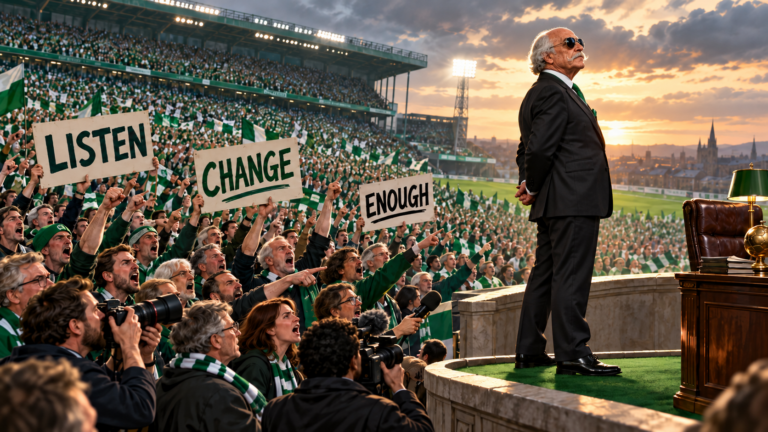
Celtic do not need another manager thrown into the same machine. Celtic need to change the machine. And until that happens, I honestly do not care how many names are linked with the Celtic job during this international break.
The biggest question is not who will be the next Celtic manager.
It is whether the Celtic Board will finally allow the next Celtic manager to actually manage Celtic. That is the question that matters most.
Choose The CelticBlog as a ‘Preferred Source’ on Google News for quick access to the news you value.