
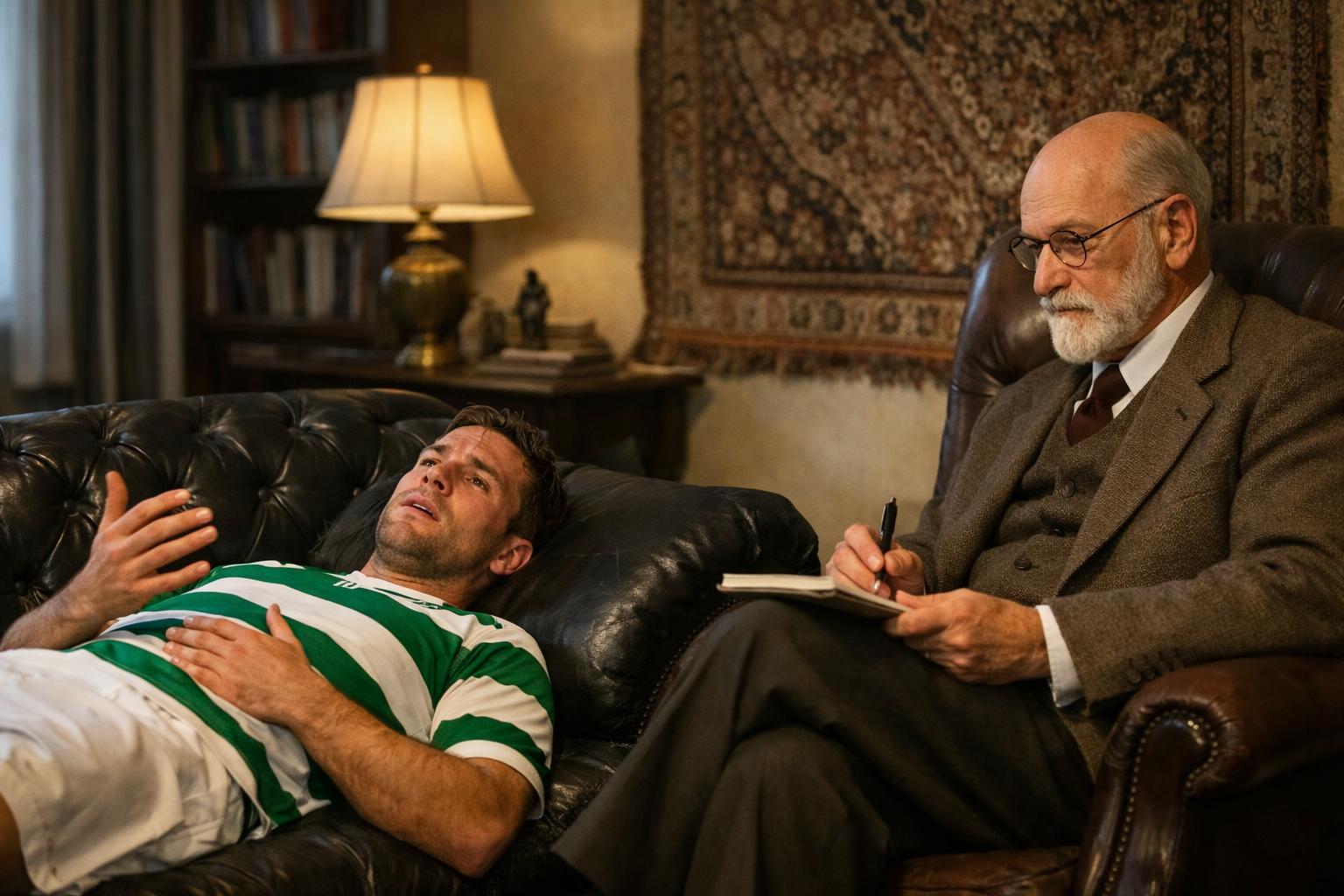
One of the things about Martin O’Neill being from the old school is that he has ideas about how footballers should react to adversity which belong to a different era. We know far more today than we did in Martin’s time as a player about psychology, about pressure and about how people respond when confidence starts to go.
I am not saying that Martin himself rejects sports psychology. I am saying that Celtic, as a club, often feels as though it does, and Martin may not challenge that because he is one of a number of people at Celtic from a generation which has never fully embraced modern football thinking in this area.
I was watching clips on YouTube the other day and one in particular stopped me in my tracks. It was about Luke Chadwick, the former Manchester United academy player who broke into the first team very young and won a title with the club.
Years later, Chadwick talked about how the media, particularly the shock-jock part of the media which annoys me so much, spent an incredible amount of time talking about how he looked rather than his football. He tried to do what young footballers were always told to do. Gut it out. Ignore it. Play through it. Pretend it was not getting to him.
But it was. He said that he dreaded Friday nights because he knew some comedy programme would probably make another joke about the way he looked. Over time, his confidence and self-esteem were chipped away by the constant barbs and ridicule.
I found that deeply sad. Football has always had this macho culture where the answer to almost everything was to toughen up, stop worrying about it and get on with your job. But that is easier said than done, especially for a young man trying to establish himself in one of the most unforgiving industries in the world.
The game has had countless examples of players dealing with things they did not feel able to talk about. The Secret Footballer wrote about dressing rooms where he suspected some players were struggling with deeply personal issues and did not feel able to speak openly. He did not push them because he understood how private those things were and how difficult football culture could make those conversations.
That was one of the saddest things in those books. People can be surrounded by teammates, coaches, staff and friends and still feel completely alone.
Those are just two areas where sports psychology matters. And it does not only matter in the deeply personal situations.
If you watched Sunderland Till I Die, you will have seen sports psychologists talking to players who had suffered recurrent injuries and asking how they felt about going back onto the pitch. Those conversations were fascinating because they showed how much of returning from injury is not physical at all.
A player can be medically fit. That does not mean he feels safe.
He can pass every fitness test in the building and still have that thought in the back of his head telling him not to fully commit to the next fifty-fifty challenge because the last time he did something similar his season ended.
And I have thought about this a lot in relation to Celtic.
I thought about it again last night when Benjamin Nygren talked about how he believes the club, and the dressing room in particular, is still suffering from a kind of post-Champions League knockout hangover.
The players came off that pitch shell-shocked by what they had allowed to happen. They had blown a four-goal lead in around sixty minutes. It was one of the most astonishing reversals in the history of the club and exactly the kind of event which can get inside the heads of an entire squad.
What I find extraordinary is that there does not appear to be any major professional sports psychology operation at Celtic designed to help players through moments like that.
Because sports psychology is not just about personal trauma, confidence or private struggles. It is about teams too.
It is about teaching players how to respond when the game turns against them. It is about positive reinforcement. It is about building enough mental resilience that one bad result does not derail a campaign and one bad moment does not destroy a match.
A good sports psychologist can teach a team how to process the second goal going in. Or the third. How not to feel beaten before they even walk back onto the pitch for the second half. How to recognise panic when it starts and stop it spreading through the team.
We have seen this problem with Celtic repeatedly.
People said after Ibrox and again after the game at Celtic Park that the players looked demoralised. Once the first goal went in, heads seemed to drop and the whole team suddenly looked as though it believed it was facing an impossible uphill struggle.
That is exactly the kind of thing sports psychology is supposed to address. You can make footballers fitter, stronger and tactically better, but if their heads go when pressure arrives, you are still leaving a huge part of performance untouched.
And this is not a new problem. For years we have watched good Celtic teams, better teams than this one, go abroad in Europe and fall into the same pattern.
Concede just before half-time. Concede again just after the break. Lose a late goal which kills the game. We have heard that record play over and over again.
At some point you have to ask whether that is entirely tactical.
I do not think it is. A lot of it looks mental. We have seen it when Celtic go into the final ten minutes of matches against stronger opposition and gradually get pushed deeper and deeper, almost as though the team is collectively waiting for the thing it fears most to happen. That is common across football. Smaller teams take the lead against stronger opponents and then start defending inside their own penalty area. The pressure builds, players stop making the decisions they made earlier in the match and the whole thing begins to feel inevitable.
We have been that team far too often in Europe.
So perhaps one of the smartest things Celtic can do is build a world-class sports psychology department as part of the evolution of the club.
These are not revolutionary ideas anymore. Other clubs have been using them for years. Players and teams have benefited from them. Elite sport understands that the mental side of performance matters every bit as much as the physical.
Celtic should understand it too. Chris Sutton called us flat-track bullies. I would not go that far, but there is clearly a difference between the confidence Celtic show domestically and the mentality we often take onto the continental stage.
That gap is not only about talent. It is not only about tactics.
Some of it is psychological. And if that is true, then there is one very encouraging thing about it. It can be fixed.
Choose The CelticBlog as a ‘Preferred Source’ on Google News for quick access to the news you value.
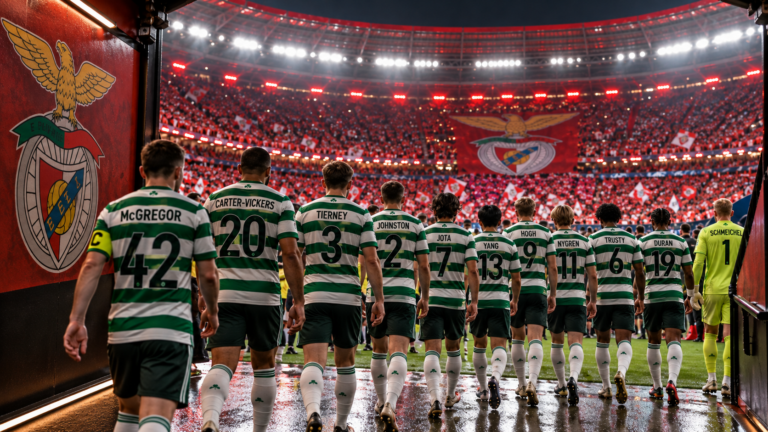







The past5 weeks has proved that our team and club are psychologically weak, to lose a 4 goal lead was the worst result ever in Europe, there’s no doubt about that, and then to go weak at the knees at the sight of the royal blue shirts of a club founded in 2012 with a very ordinary group of players, is just cowardice and weakness. That Sevco team were struggling in every game they played, until they met a Celtic team that were short of character, and ill prepared.
These Celtic players have reached a professional level in their careers, that they shouldn’t feel inferior to the likes of Lask or The Rangers. The managing and coaching of this team has been lamentable over the past 5 weeks.
If Martin has decided to stay on at Celtic, then I think he and his coaches have got to up their game.
Oct comes with 4 Premier League games and two Euro League games, they all look pretty competitive, and will test our coaches and players. Lets hope things don’t look too scary by the time Halloween comes around.