

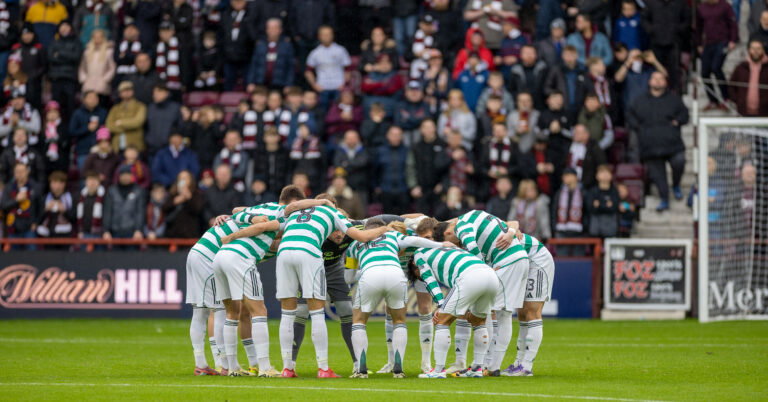
11th October 2026; Fir Park, Motherwell, North Lanarkshire, Scotland; Scottish Premiership Football, Motherwell versus Celtic; Mika Baur of Celtic
There’s something happening at Celtic that deserves considerably more attention than another debate about refereeing decisions, missed chances or the fine margins of European football.
The players are beginning to say things.
Not necessarily explosive things. Nobody has marched into a press conference and demanded a change of manager. There hasn’t been an open rebellion or some dramatic dressing-room confrontation.
But listen carefully to what Celtic players have been saying over the past few weeks, and a rather uncomfortable picture begins to emerge.
Cameron Carter-Vickers questioned the randomness of Celtic’s performances. Callum McGregor spoke about things being broken in how the team wanted to play.
Now Mika Baur has delivered another remarkably candid assessment following Thursday night’s 2-1 Europa League defeat to Celta Vigo.
At what point do we stop treating these as isolated comments and start asking whether Celtic’s players are struggling with the direction they’re receiving?
Because, to me, these remarks are becoming every bit as concerning as the results themselves.
Baur’s Verdict Was Far More Damning Than O’Neill’s
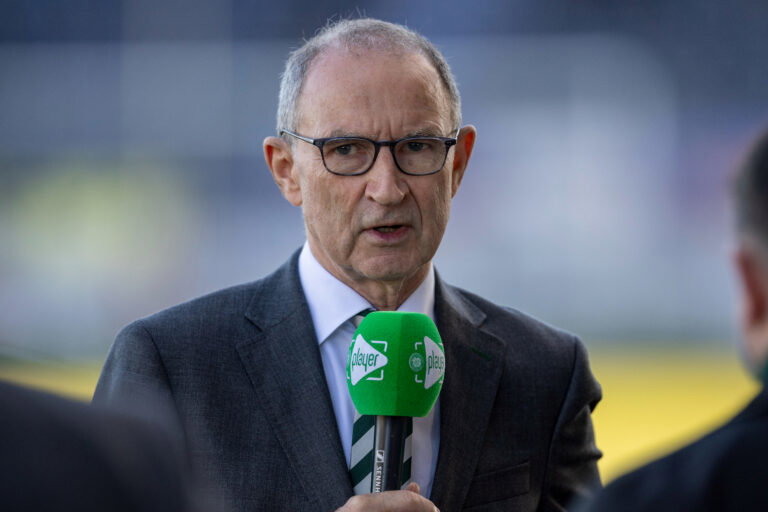
Martin O’Neill’s assessment of the Celta Vigo defeat concentrated heavily on moments that might have changed the outcome.
Liam Scales struck the crossbar with a header that could have doubled Celtic’s advantage. The manager also believed his side should have been awarded a foul shortly before the visitors equalised.
Those are legitimate talking points.
But Baur, the man who actually scored Celtic’s goal, offered a considerably less comforting explanation.
Speaking to TNT Sports, the midfielder admitted Celtic had become passive and surrendered control of the match.
He described a team unable to respond when Celta Vigo took the initiative.
Then came the most revealing moment of the interview.
Asked why Celtic had lost control, Baur replied:
“I cannot tell you. I’m sorry. I have no idea.”
Read that again.
A Celtic player, standing there after another European defeat, unable to explain why his team had completely lost its grip on a match.
That’s not simply frustration about a missed chance.
That’s a player admitting he doesn’t understand why the team couldn’t respond to what was happening around him.
And that should concern everybody at Celtic.
Carter-Vickers Warned Us About This Weeks Ago
Cast your mind back to the defeat against Rangers in September.
Cameron Carter-Vickers was equally candid in his assessment of Celtic’s performance.
He told Sky Sports:
“We played a bit too random.”
The defender also spoke about needing a script and sticking to it.
That word, random, has stayed with me ever since.
It’s a remarkable description for a player to use about his own football team, particularly one with Celtic’s resources and ambitions.
Carter-Vickers was discussing the need for structure, consistency and something familiar to rely upon when matches became difficult.
He wasn’t explicitly accusing the coaching staff of incompetence. In fact, he made clear that players shared responsibility and rejected the suggestion that he was necessarily demanding better direction.
That distinction matters.
Nevertheless, the underlying concern was unmistakable.
Celtic were struggling to establish a reliable way of playing.
Now, several weeks later, Baur is standing in front of the cameras admitting he has no idea why the team couldn’t regain control against Celta Vigo.
Different player. Different opponent. Different competition.
Yet the underlying problem sounds remarkably familiar.
Even The Captain Has Raised Concerns
We shouldn’t forget Callum McGregor either.
Following the Europa League defeat to Ferencváros, Celtic’s captain acknowledged that aspects of the team’s play appeared broken, nervy and awkward.
That’s three important players publicly discussing issues that go beyond individual mistakes.
McGregor has been at Celtic long enough to recognise what a functioning football system looks like.
Carter-Vickers understands the importance of defensive organisation and consistency.
Baur is now describing a midfield unable to regain possession, manage momentum or prevent opponents from dominating dangerous areas.
I’m not suggesting these three players have gathered together to undermine Martin O’Neill.
There’s no evidence of that.
But I am asking whether their comments amount to a series of thinly veiled criticisms of the way Celtic are being coached.
Because if players repeatedly talk about confusion, randomness and a lack of control, it’s reasonable to ask who is responsible for giving them clarity.
A Defined Philosophy Protects The Manager Too
I made this point on The Bhoycie Bus, and I believe it’s absolutely central to Celtic’s current problems.
Having a recognisable football philosophy doesn’t just benefit the players.
It protects the manager.
You can call that self-serving if you like. Managers establish identities partly because they believe those ideas will bring success, but a clear philosophy also gives supporters something tangible to believe in during difficult periods.
Take Ange Postecoglou.
Under Ange, we knew exactly what Celtic were trying to achieve.
There was attacking intent, aggressive pressing, movement, bravery in possession and a determination to impose our football on the opposition.
Sometimes it worked beautifully.
Other times, particularly in Europe, opponents exposed the risks associated with that approach.
But even when things went wrong, supporters could identify what the manager was attempting.
There was a philosophy to assess.
There was an identity to defend.
There was a recognisable direction.
Had Celtic lost 16 matches under Ange, I believe many supporters would still have found it easier to understand the defeats because they could see what the team was trying to build.
That doesn’t mean supporters would have accepted losing indefinitely.
Results still matter.
But there’s an enormous difference between losing while attempting to execute a recognisable plan and losing while everybody is wondering what the plan actually is.
Celtic’s Constant Changes Are Creating Questions
Look at the conversations surrounding Celtic’s team selections this season.
How often have supporters debated which formation we’ll use before a match?
How frequently have we watched the team change shape during games?
We’ve seen different starting combinations, different tactical arrangements and adjustments that sometimes leave supporters guessing about the intended approach.
Flexibility isn’t automatically a weakness.
The best managers can change formations, respond to opponents and make tactical alterations without sacrificing their team’s identity.
But flexibility and uncertainty are not the same thing.
A team should be capable of changing shape while retaining the principles that make it function.
That’s the difference between a tactical adjustment and a collection of players desperately trying to work out what happens next.
O’Neill has defended his approach, arguing that teams should be comfortable operating in different systems.
He has also pointed to occasions when tactical changes produced victories.
Fair enough.
But the question isn’t whether changing formation can win a football match.
Of course it can.
The question is whether Celtic’s players have a sufficiently clear understanding of their responsibilities when those changes happen.
Carter-Vickers’ comments suggested that understanding wasn’t always there.
Baur’s admission on Thursday hardly provides reassurance.
The Manager Has Already Pushed Back
To be fair to Martin O’Neill, he hasn’t ignored the criticism.
When Carter-Vickers’ remarks became a talking point, the Celtic manager defended the clarity of his communication and his record of making tactical adjustments.
He rejected the suggestion that his players weren’t receiving understandable instructions.
That’s his right.
O’Neill has decades of managerial experience and has earned the right to defend his methods.
However, experience alone doesn’t settle the argument.
Football changes. Players change. Squads evolve.
A manager’s responsibility is to make sure the team understands what is expected of it now, not simply point towards tactical decisions that worked in previous seasons.
If the players are repeatedly struggling to execute the plan, then the effectiveness of that plan deserves scrutiny.
And if they cannot explain why control disappears during matches, the coaching staff should be asking some uncomfortable questions.
Are The Players Beginning To Turn?
This is where we need to be careful.
I don’t believe we have enough evidence to claim Celtic’s players are actively turning against Martin O’Neill.
That would be a serious accusation.
But are some beginning to question the direction of the team?
Are frustrations creeping into interviews that would previously have remained behind closed doors?
I think those are entirely reasonable questions.
Scott Brown has already expressed concern about players airing their grievances publicly, arguing that such comments provide ammunition for critics.
He has a point.
Celtic don’t need another sideshow.
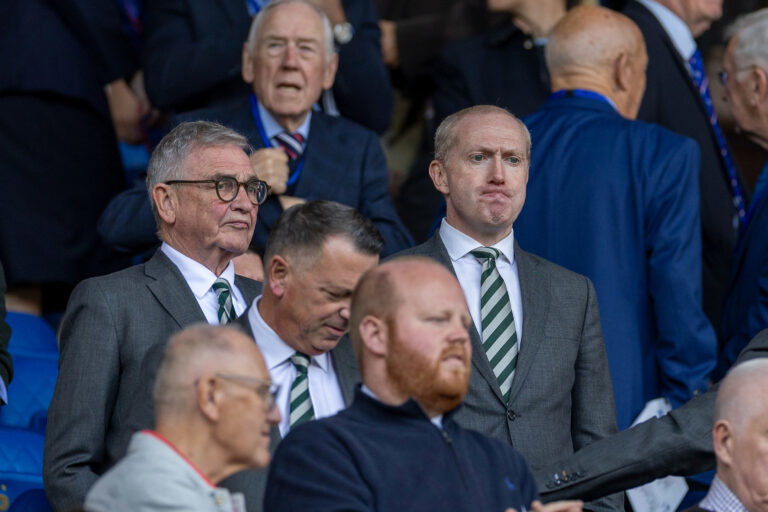
The boardroom situation, European performances and ongoing questions about recruitment have provided enough distractions.
A developing disagreement between players and management would be the last thing this club needs.
Yet I can also understand why players might be frustrated.
Imagine repeatedly finding yourself exposed defensively, watching opponents move through your midfield and struggling to establish control despite working hard.
Eventually, you’re going to wonder whether the issue extends beyond individual performances.
That doesn’t excuse mistakes.
It doesn’t remove the players’ responsibility.
But it certainly makes their comments worth examining.
Celtic Need More Than Another Explanation About Fine Margins
Celta Vigo didn’t simply defeat Celtic because one header struck the crossbar.
They scored twice in three minutes and turned a losing position into victory.
The statistics make uncomfortable reading: 22 attempts from the visitors compared with Celtic’s eight.
That doesn’t mean Celtic were hopeless throughout the evening.
We competed for spells.
But competing for spells isn’t the same as controlling a European football match.
And that’s the problem.
Carter-Vickers spoke about randomness. McGregor described a team struggling to function as intended. Baur admitted Celtic couldn’t regain control and couldn’t explain why.
These are not identical statements, but they belong in the same conversation.
Celtic’s players are publicly describing the symptoms of a team without a sufficiently settled identity.
Whether that comes from coaching, confidence, recruitment, individual mistakes or some combination of all four, the responsibility ultimately reaches the manager.
Martin O’Neill can continue pointing towards the moments that might have changed individual matches.
But he must also address the wider pattern.
Because the most worrying thing about Thursday night wasn’t simply that Celtic lost another European game.
It was hearing the man who scored our goal admit he had no idea why his team couldn’t take control again.
When your own players cannot explain what is going wrong, supporters are entitled to question whether the people directing them have provided enough answers.



Baur himself stated the league comes first, now correct me if I’m wrong but does creating two tiers of importance not have an effect of allowing a drop off in performance or effort in the less important tier ?
Even subconsciously ?
You must win at the weekend but it’d be good if you did during the week but it’s not as important.
Straight away that creates a situation where less than 100% effort and application is ok in Europe as long as you give 100% in the SPFL.
Is the manager/ board giving the players a ready made excuse to not try so hard in Europe ?
And further up the chain is the board giving the manager/coaches a ready made excuse to not try so hard in Europe ?
I’d say yes to all those questions.
Which takes me right back to where I start –
If the board/manager doesn’t prioritize Europe then why should Celtic fans ?
The answer is we live in hope.
All those fans who turned up on Thursday for Benfica hoped we had turned a corner and were back to being a competent team in Europe once again.
I presume many pennies dropped after that match expectation wise.
Perhaps Mika won’t be “injured” for Hibs after a wee informal chat on communications going forward.
Lol.
Cal Mac after SEVCO pumped us 0-3 in paradise!
He stated that the difference between the two sides was stark, calling Rangers a cohesive team while accusing Celtic of playing like a “team of individuals” who wanted to play only when they had the ball rather than work off it. McGregor emphasized that “you can’t defend with six players, it’s impossible,” warning that the result was “not acceptable” after also falling short against LASK, and stressed that “the penny has to drop” quickly for the squad to perform at Celtic’s standard.
Midfielder Mika Baur admitted the team was “too passive” and unable to regain control once the momentum shifted. Expressing his frustration, he stated: “Then they scored, and at that moment the momentum switched completely and we were not capable to switch it again. We had no control.”
I read from his comments that nobody on or off the field were capable of making adjustments to compensate for the momentum switch.
Auld Martin going on about Scales header hitting the bar etc,etc,etc.
Was Pathetic and is destroying the confidence of the players and the fans.
Martin Malone and Fozzy need to be P45ed! A.S.A.P…IMO