
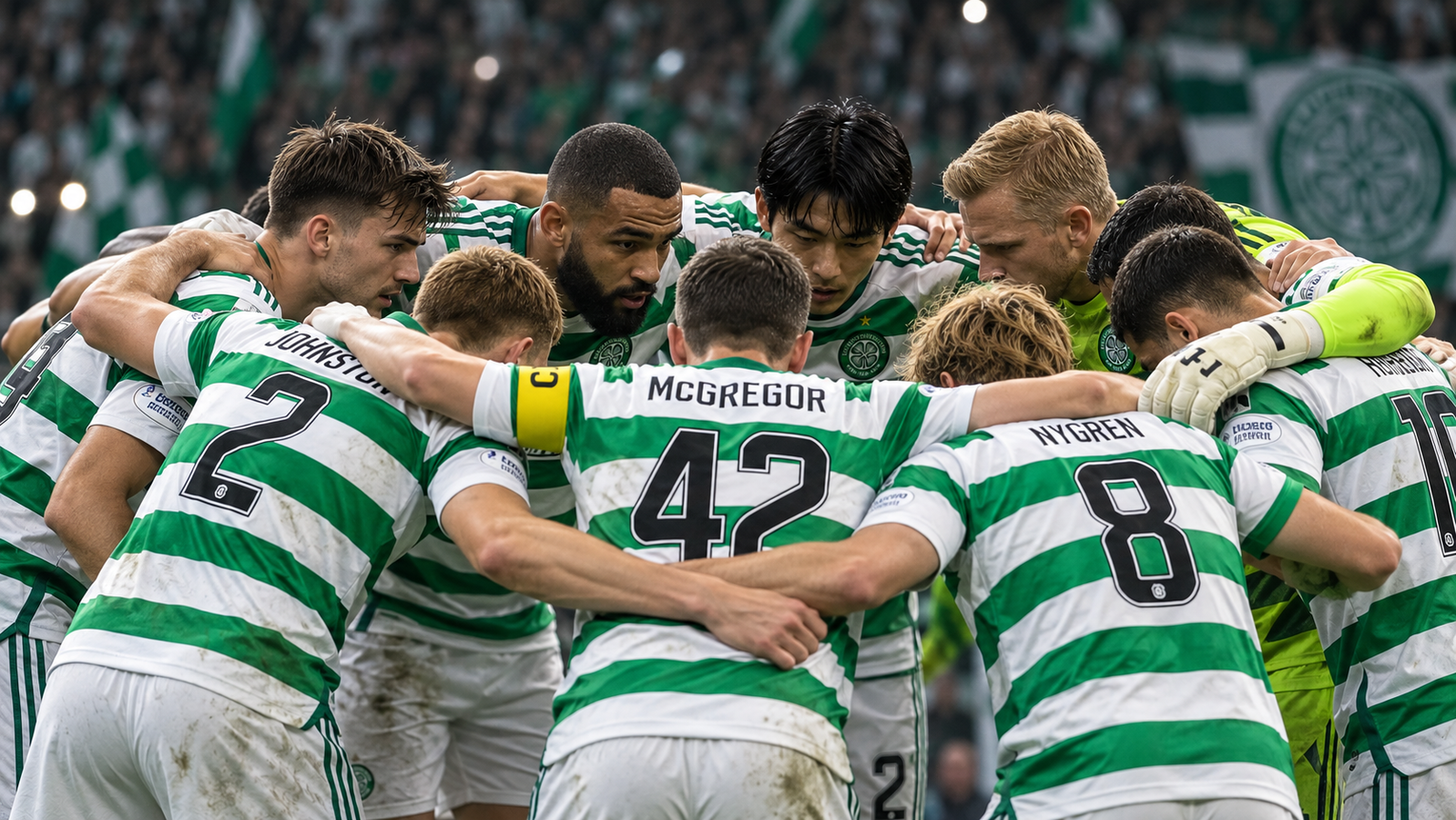
There is something I want to see more than anything else at Celtic right now: clarity, unity, leadership and a team that knows exactly what it is supposed to be doing on the football pitch.
Is that really too much to ask from a club of Celtic’s stature?
Apparently, in recent weeks, it has been rather complicated.
However, the latest developments surrounding Martin O’Neill and his squad might offer us a little hope. The Celtic manager has reportedly held a clear-the-air meeting with his players and, most importantly, it seems he’s re-established chain of command.
I consider both developments significant.
After everything we have witnessed recently, I would welcome a little less drama and a lot more football, thank you very much.
Martin O’Neill staying matters because Celtic have already had enough uncertainty, disappointment and managerial upheaval to last several seasons. We do not need another change of direction every five minutes, particularly when the team is still searching for consistency and a recognisable identity.
There is a bit of continuity here. And if he’s established that he, and not anyone else, is in control over team matters, all the better.
I want stability. I want the manager to have the authority to establish his principles, communicate his expectations and demand that every player understands his responsibilities.
Above all, I want the players to take those instructions onto the pitch rather than leave them somewhere in the dressing room.
A clear-the-air meeting can be exactly what a team needs when communication has broken down, confidence has suffered or players have become uncertain about their roles.
Sometimes people simply need to sit down, put their cards on the table and establish what is expected of everyone.
Footballers are professionals, but they are human beings too. A dressing room is not a collection of eleven individuals who happen to wear the same shirt. It has to function as a team, with shared objectives, mutual understanding and collective responsibility.
If O’Neill has used this meeting to establish those foundations again, then Celtic could be in a much better place than they were before the international break.
Of course, a meeting alone will not win us the league or guarantee success in Europe.
The real test is whether the words spoken in that room translate into action.
That brings us to Motherwell.
After three consecutive defeats before the international break, I wanted a response. Not necessarily some extravagant footballing masterpiece, but clear evidence that Celtic understood what had gone wrong and were prepared to correct it.
Before the break, Celtic looked disjointed. The structure was questionable, performances lacked consistency and there were moments when I genuinely wondered whether everyone on the pitch was working from the same set of instructions.
Cameron Carter-Vickers had already spoken about the team lacking clarity, and that struck at the heart of the problem.
A team can have talented players, experienced professionals and a respected manager, but talent cannot compensate indefinitely for confusion.
A football team without a clear identity eventually becomes eleven players hoping individual ability will rescue the collective performance.
And hope, as we have discovered, is not a particularly reliable tactical system.
Against Motherwell, there were encouraging signs of something different.
Celtic took the game to their opponents. We played on the front foot. There was movement, purpose and a much clearer sense of what the team was trying to do. Camilo Durán scored the opener and Benjamin Nygren added the second.
Was everything suddenly perfect?
Of course not.
I am delighted with the three points, but I am not going to declare every problem solved because Celtic won one football match.
Nevertheless, there was a visible improvement.
And Liam Scales has now given us an interesting glimpse into what happened behind the scenes.
He said the players returned and held a meeting in which they went through the team’s principles, watched clips of Celtic playing at their best and saw how excited O’Neill and his coaches were about what the team could become.
Then came the sentence which matters most.
“It’s just a case of doing it now.”
Exactly, Liam. Precisely. That is where Celtic are.
We have heard explanations. We have heard reassurances. We have heard about principles and potential.
Now show us. If the players understand what is expected, there should be fewer excuses for looking disorganised. If responsibilities are clearer, those responsibilities have to show themselves in positioning, movement, pressing, decision-making and collective effort.
Football is not an English examination, but the principle is remarkably similar. Knowing the correct answer and actually producing it are two entirely different things.
There also needs to be a clear chain of command.
Every successful team needs leadership. The manager leads. The coaches communicate. The players understand their roles and execute them.
That does not mean players should not raise concerns or ask questions. Quite the opposite. Healthy communication matters.
But once those discussions have taken place and decisions have been made, everybody has to know what is expected.
Celtic cannot continue operating in an atmosphere where everyone seems to be waiting for somebody else to provide the answers.
That is where O’Neill’s experience and authority become important.
He needs the backing of his players and the freedom to make football decisions. The players, in return, have to respond with professionalism and accountability.
Unity cannot simply be another slogan.
You demonstrate it when pressure rises, when games become difficult and when individual interests have to give way to the needs of the team.
That is the standard Celtic should demand.
And if a frank conversation has helped re-establish those standards, then I welcome it.
But Motherwell has to be the beginning. Complacency cannot creep in.
One victory does not erase the defeats which preceded it. It does not automatically solve every tactical weakness and it certainly does not guarantee consistency domestically or improvement in Europe.
We need to see those principles repeated.
We need to see Celtic controlling matches, creating chances, defending properly and responding when opponents make life difficult.
I do not expect perfection overnight.
I expect progress. I expect accountability. And I expect a visible commitment to getting better.
So, Martin O’Neill has my support in trying to bring clarity and stability back to this squad.
The players have had the meeting. They have discussed the principles. They have watched the clips. They have reminded themselves what Celtic can look like when everything clicks.
Now the talking has to stop and the football has to do the talking.
Choose The CelticBlog as a ‘Preferred Source’ on Google News for quick access to the news you value.





Looked to me as if MON and SM weren’t getting on last Sunday…No celebrations between them that I could see…even at full time…..Anybody heard anything…??
Been that way for a while now.
Paulina, you mentioned next to nothing about the “coaching” staff. I think our problems are stemming from them. Terence Nova (above) mentions the atmosphere between MON & SM. I thought i noticed that too. And i wouldn’t be surprised to find SM at the root of all the “confusion”. He was a failure at his previous clubs so what makes him qualified to coach at Celtic? He’s not good enough. And i really hope he’s not offered the job when MON retires.
Improvement from what Paulina?
We have beaten Dundee, Kilmarnock, Falkirk, Aberdeen, St. Mirren & St. Johnstone already this season. Beating a depleted Motherwell with a weakened squad and brand new manager is not an improvement
We have been cuffed by LASK, Ferencevaros and the Ibrox entity x 2.
If we get something from Benfica that will be an improvement not beating a little team from Scotland with a tiny fraction of our resources.