
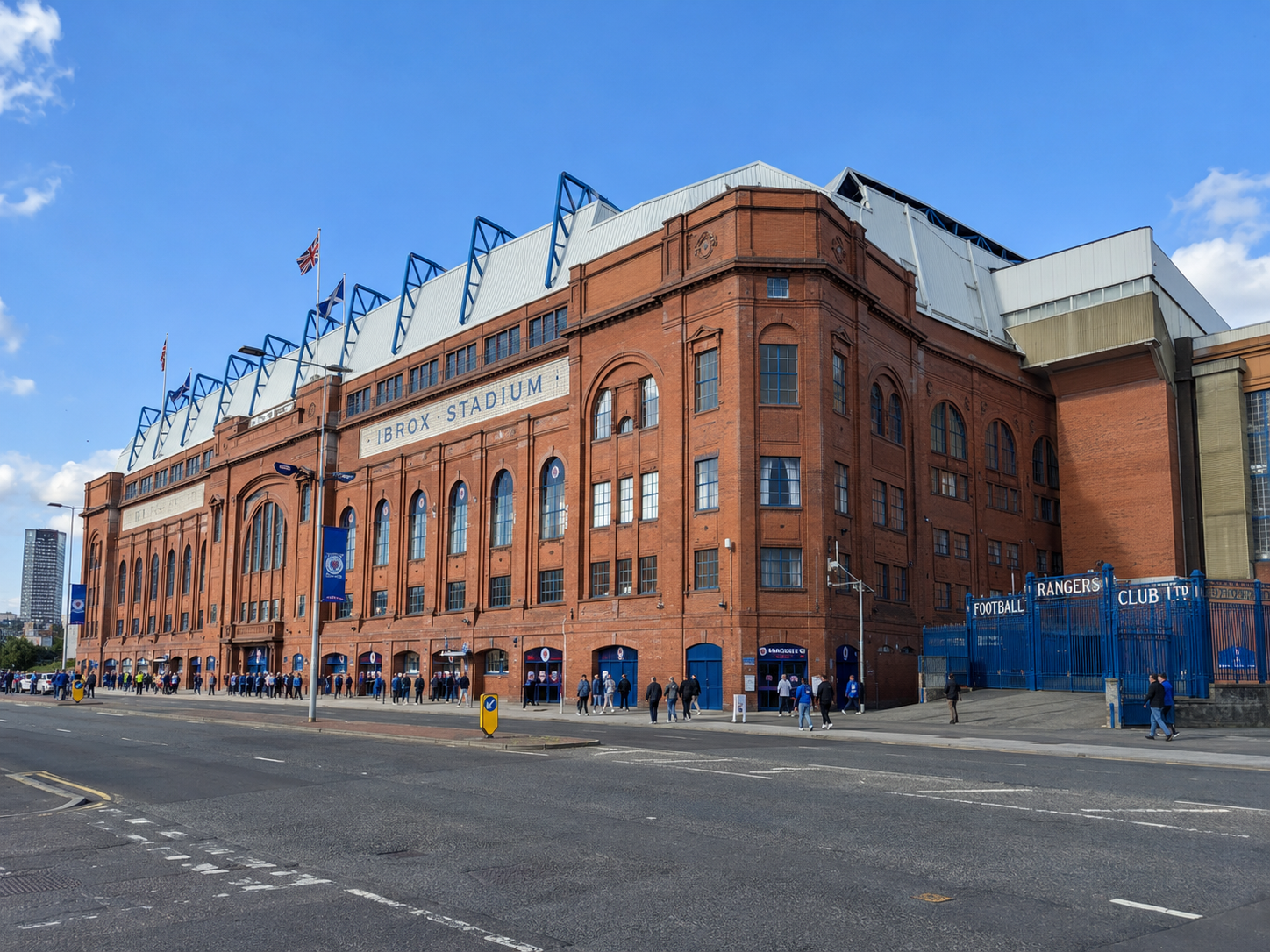
There is a tendency in Scottish football to look at accounts as if they are simply a snapshot of the past. Revenue was this. Losses were that. Wages went up. Transfer spending went down. Move on.
But football accounts are not really interesting because of what they tell you about where a club has been. They are interesting because of what they tell you about where that club can go next.
And when you look properly at the Ibrox club’s numbers, the question is not whether they can survive. That is not the issue. The question is whether the strategy they have embarked upon can possibly deliver what it was designed to.
Because this looks very much like a football club which has made a very large bet on the present. And if that bet fails, the consequences will not be confined to one disappointing season. They will roll forward.
That is the part of this story which matters.
This is a severely truncated version of what was a much longer piece. I felt I had to get something up on it because I’ve been talking about it so long. The bet Ibrox has made is not difficult to see; they’ve overspent in trying to win this year’s title. They are presently four points behind. Maybe they pull it off and maybe they don’t, but nobody can deny, when you crunch the numbers, how big the gamble is.
Based on their last set of figures, the headline numbers alone should already make people sit up. Revenue of around £94.1 million. Operating expenses of around £92.2 million. A loss of approximately £14.8 million. Amortisation of around £12.7 million.
Those are not the numbers of a club operating with enormous room for error. They are the numbers of a football business which needs to generate significant income from elsewhere simply to support the scale of the operation it has built.
Those numbers related to a season where they sold players for reasonable sums. They relate to a season in which there was a full European campaign. None of those criteria applies to this campaign. The consequences of that hardly need spelling out.
Owner money can solve a liquidity problem. It can pay bills. It can allow transfers to happen. It can cover losses. What it cannot do is magically create unlimited spending room under UEFA’s financial sustainability framework.
This is where a lot of the discussion around the Ibrox club becomes hopelessly confused. People see wealthy owners and assume that wealthy owners mean unlimited spending.
They do not. Football is not structured like that anymore. You can put money into a football club, but you cannot simply ignore the relationship between revenue, football costs, wages, transfer amortisation and UEFA’s squad-cost rules.
And this club has spent heavily. Very heavily.
Once you take committed transfer fees into account, the level of incoming expenditure across the recent windows is somewhere in the region of £37 million. The sales coming back the other way are nowhere near that. Roughly £11 million is a reasonable estimate.
That matters because transfer spending does not simply disappear after the day the player signs. Fees are amortised across contracts. Today’s transfer window becomes tomorrow’s accounts, then the accounts after that.
That is the bit people routinely miss.
A club can spend £10 million on a player and pay the fee in instalments. It can spread the accounting charge across four or five years. But that does not make the cost disappear. It means the cost follows you.
When you sign enough players that way, the cost base begins to fill up with decisions which were made several windows ago.
That is fine when revenues are rising. It is fine when European football is delivering. It is fine when player trading produces major profits.
But take one of those pillars away and things become tighter. Take two away and things become much tighter. Take all three away and you have a problem.
That is why Europe matters so much here.
The difference between Champions League football and Europa League football is enormous. The difference between Europa League football and no meaningful European campaign at all is enormous.
For a club operating at around this cost level, European income is not a nice bonus. It is a structural part of the model.
And when that income disappears, the operating costs do not disappear with it. The wages still have to be paid. Transfer instalments still have to be paid. Amortisation still goes through the books. The stadium still has to operate. The football department still has to be funded.
The bills remain even when UEFA’s money does not.
This is why the failure to qualify properly for Europe is not just a sporting embarrassment. It has consequences, and those consequences become more serious when a club has already spent heavily in anticipation of success.
Then there is player trading.
This is another area where people look at theoretical values and confuse them with actual money. Nicolas Raskin is a good example. If a player has significant market value, that is useful only if you actually sell him. Until then, the profit exists only in theory.
You cannot book an imagined transfer fee. You cannot include supporter estimates of what somebody might be worth in your accounts.
A player might be “worth” £15 million, £20 million or whatever figure somebody wants to put on him. The accounting benefit is zero until somebody buys him.
And if you decide to retain that player because you believe he can help win the league, that is a legitimate sporting choice. But it is still a choice with financial consequences. You have elected not to realise the asset.
That means the financial pressure has to be absorbed somewhere else.
This is what makes the current Ibrox strategy so interesting, the one Marathe himself admits amounts to overspending in the here and now.
They have decided to carry significant football costs. They have invested in the squad. They have retained saleable players. They have effectively said that competitive success now is more valuable than financial flexibility later.
Maybe they are right. If they win the league, qualify for the right European competition and generate the money which follows from that, the gamble can look completely different. Success changes the numbers.
Champions League income changes them dramatically. A major player sale changes them. A deep European run changes them. But that is exactly why this is a bet, because those outcomes are not guaranteed.
And if they do not happen, the expenditure remains.
That is where the three-year nature of the financial regulations becomes important. You do not simply draw a line under a bad year and begin again. The numbers move with you. The spending decisions move with you. The amortisation moves with you. The wage commitments move with you. The revenue shortfall moves with you.
A bad season can therefore constrain the next summer, and the summer after that. The biggest misunderstanding in all of this is the idea that outside investment makes those consequences irrelevant.
It does not. Again, money from investors matters enormously for cash flow. It can prevent a financial crisis. It can allow a club to continue paying its obligations without selling players under pressure. It can provide stability.
But UEFA does not simply say that because a wealthy shareholder is willing to write a cheque, the football department can spend whatever it likes.
The regulatory calculation is still there. And when football costs rise faster than football revenues, the room available for future spending shrinks.
That is the real danger. Not administration. Not liquidation. Not some hysterical replay of 2012. Those comparisons are lazy and unnecessary.
The danger is much more ordinary. The danger is that a club spends heavily trying to close a gap, fails to close it, and then discovers that the regulations give it less freedom to try again. That is how a one-year gamble becomes a multi-year constraint.
And Celtic has a role in this. A very large one.
Because if Celtic wins this league, we do not simply win another title. We deny the Ibrox club the revenue event around which this whole strategy appears to have been constructed. That does not mean they collapse. It means the next decisions become much harder.
Do they sell players they wanted to retain? Do they reduce wages? Do they trim the squad? Do they postpone spending? Do they accept that the next rebuild has to be cheaper? Do the owners continue covering losses while the football operation itself has to operate within tighter UEFA limits?
Those are the questions.
And the answers become more uncomfortable if the club does not have significant European income to soften the blow.
This is why people who look at the current Ibrox spending and conclude that the new owners have simply decided to throw money at the problem are missing the point.
They have not abolished arithmetic.
They have simply changed who is carrying some of the risk.
The football club still has to generate revenue. It still has to remain within the regulations. It still has to make decisions about which players to keep and which to sell.
And it still has to win. That last part is rather important.
Because the model becomes much easier to justify if the football side delivers. If it does not, then this season begins to look very different; it begins to look like one Hell of a big bet on either red or black.
Then you are looking at a large operating base without the expected European return either this year or next. Bear in mind, the title winners play a horrible number of Champions League qualifiers as of the next campaign. The second placed team enters the qualifying process in the Conference League.
You are looking at substantial transfer commitments still rolling forward. You are looking at player-sale profits which may have to be generated rather than treated as optional. You are looking at financial sustainability calculations which incorporate the consequences of this year, and then you watch what happens as the true cost of the gamble becomes apparent; it was never confined to the season in which it was made.
This year is the bet. Next year is the reckoning if the bet fails. The year after that is where you discover whether the whole model was sustainable in the first place. That is why Celtic winning this league matters beyond another trophy in the cabinet.
We do not simply beat them. We deny them the bridge they are trying to build between the spending they have already committed and the revenues they need to justify it. And once that bridge is merrily burning, their troubles start to fall on them like rain. £90 million in costs. Revenues one third lower … and it only gets worse from there.
Choose The CelticBlog as a ‘Preferred Source’ on Google News for quick access to the news you value.



There was no need for such a long winded article James, but thanks just the same for your hard work, analysis and insights.
However, all you had to say was:-
If things remain the same at Ibrox and there is no immediate success, then the huns will soon be Donald Ducked again. 🙂
How sweet it would be if that came to pass. Our club could help it become their new reality if only they had the foresight. If we can at least maintain the gap till the transfer window opens and then buy the players required to widen it, things could become quite the comedy over Castle Greyskull way.
In other words their board are the polar opposites of Celtic’s.
They’re spending money they don’t have or haven’t earned to try to achieve success. Celtic won’t spend the money they have and have earned just to get back to the level they were at quite recently, never mind improving.