
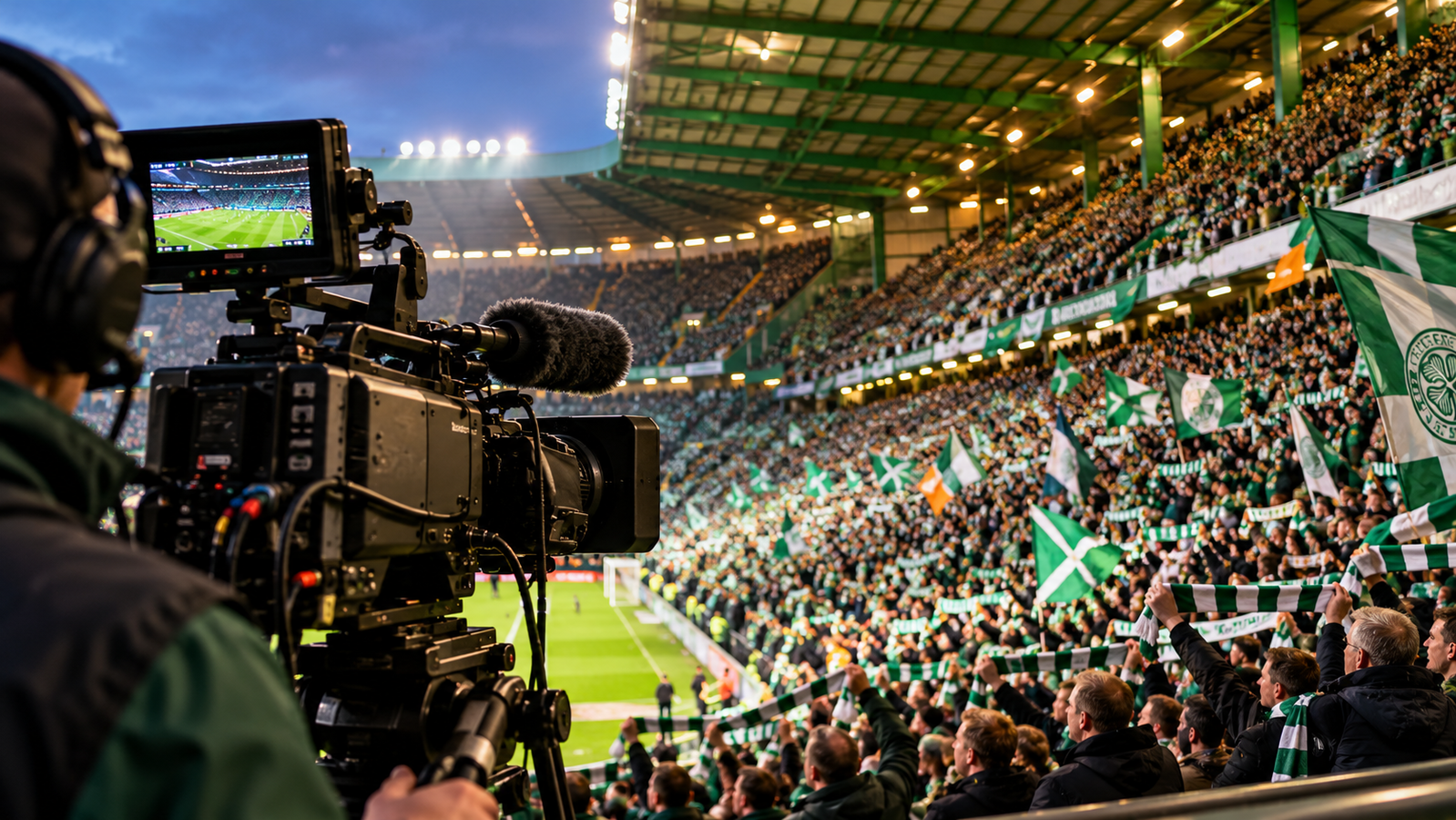
Scottish football has a problem. Actually, it has several, but one of the biggest is staring us right in the face every time we look at the television revenues being generated elsewhere in Europe.
We are falling behind.
Not because Scottish supporters have lost interest in football. Quite the opposite. Our appetite for the game remains extraordinary, particularly when you consider the size of our population.
Yet the money coming into our clubs from broadcasting simply doesn’t reflect that passion.
Now, with the SPFL reportedly exploring the possibility of making every Premiership fixture available to broadcasters from 2029, we’re potentially approaching one of the biggest changes to Scottish football in generations.
And I find myself torn.
Because Scottish football absolutely needs to get creative. It needs to become ambitious, innovative and considerably better at selling itself.
But in chasing television money, we must never jeopardise the one thing we’ve consistently got right.
Getting supporters through the turnstiles.
Scottish Football’s Greatest Asset Isn’t Sitting In A Television Studio
Scotland has repeatedly been recognised as one of Europe’s strongest football nations for attendance relative to population.
Think about that for a moment.
We’re a relatively small country, yet our clubs attract remarkable numbers of supporters every single weekend.
Celtic and Rangers naturally contribute enormously to those figures, but this isn’t exclusively an Old Firm phenomenon.
From Aberdeen and Hearts to Hibernian, Dundee United and clubs throughout the divisions, Scottish football possesses a matchgoing culture that bigger countries would love to replicate.
It’s something we should be celebrating, protecting and building upon.
And there’s another important point here.
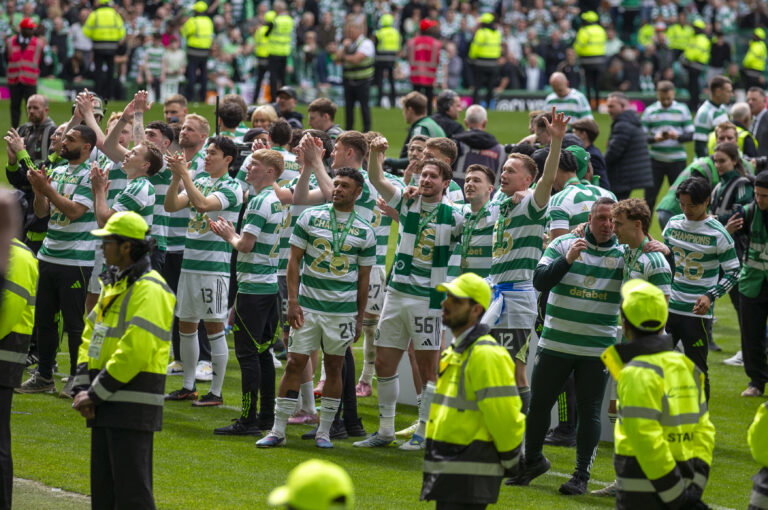
Those supporters aren’t simply creating an atmosphere for television cameras. They’re buying season tickets, paying at the gate, purchasing refreshments and contributing directly to the financial survival of their clubs.
Matchday revenue matters enormously in Scotland.
For some clubs, it’s the difference between operating sustainably and finding themselves in serious financial difficulty.
So when we start discussing televising every Premiership fixture, including potentially Saturday afternoons, my immediate question isn’t simply how much money broadcasters might offer.
It’s what happens to the supporters who currently attend those matches.
Because if we damage that culture, we could find ourselves solving one financial problem while creating an even bigger one.
We Cannot Keep Pretending Our Television Deal Is Good Enough
Now, here’s where the argument becomes more complicated.
I don’t believe Scottish football can afford to stand still.
The current broadcasting landscape has left us trailing leagues we should at least aspire to compete with financially.
Norway is frequently brought into these discussions, and with good reason. Its domestic broadcasting arrangements demonstrate that leagues outside Europe’s traditional elite can attract substantial television investment.
We should be studying how other countries package their competitions, market their football and generate commercial interest.
Why shouldn’t Scottish football experiment with different broadcasting models?
Why couldn’t we explore alternative subscription packages, enhanced international coverage, individual match purchases or a dedicated streaming platform?
Perhaps there are opportunities to offer supporters greater choice without simply handing every fixture to one broadcaster.
I’m not pretending any of these ideas guarantees a financial windfall.
But I’d much rather see the SPFL exploring possibilities than accepting that our current position is the best we can ever achieve.
We need to get funky.
We need to get creative.
And, above all, we need to stop behaving as though Scottish football should be grateful for whatever scraps happen to come our way.
Sky Sports Isn’t Entirely To Blame
Here’s something that might surprise people who regularly read my articles.
I’m going to defend Sky Sports.
Not its entire presentation of Scottish football. Not every scheduling decision. And certainly not the quality of every broadcast.
But the commercial reality of its investment deserves a fair hearing.
Supporters regularly accuse Sky of undervaluing Scottish football.
Perhaps they do.
But there’s a fairly obvious problem with that argument.
Where exactly were all the other broadcasters queuing up to pay more?
When the SPFL agreed its previous broadcasting arrangements, Sky was effectively the only serious bidder at the level required.
And when the league subsequently agreed an early extension, Sky held a powerful negotiating position precisely because meaningful competition was absent.
That’s not necessarily Sky’s fault.
That’s the reality of the market.
I also remember the discussions surrounding BT Sport’s interest several years ago. My understanding was that its proposed terms represented a substantial reduction compared with what it had previously paid for a smaller package of Scottish fixtures.
If that was the alternative, what exactly were the SPFL supposed to do?
Turn down the only commercially credible offer and hope somebody appeared with a bigger cheque?
You can criticise Sky’s coverage all day long. I’ve done it myself.
But there’s an enormous difference between criticising a broadcaster’s presentation and blaming it for the absence of competitors.
If Sky is the only company prepared to invest serious money, then its offer is the best offer actually available.
That’s not an endorsement of the amount.
It’s an acknowledgement of reality.
More Television Money Means Nothing If The Terraces Start Emptying
This brings us back to the proposed expansion of televised Premiership football.
I’m not automatically against it.
In fact, I think the SPFL has a responsibility to explore every credible opportunity to increase revenue.
But the calculations must go beyond the headline broadcasting figure.
Suppose a new deal brings considerably more money into the league. Fantastic.
Now suppose clubs begin losing matchday customers because supporters can watch every fixture from their living rooms.
How much of that extra broadcasting income disappears through reduced ticket sales and other matchday spending?
And what happens to the atmosphere that makes Scottish football such an attractive product in the first place?
The last thing I want is Scottish football becoming a television competition played in front of increasingly empty seats.
We cannot assume that would happen, but we’d be fools not to examine the risk.
Perhaps protecting certain kick-off slots would help. Maybe broadcasters could offer more games outside traditional Saturday afternoons.
There might even be a model where clubs are compensated for demonstrable losses in attendance.
Whatever the answer, supporters and clubs must be central to the conversation.
Scottish Football Must Grow Without Forgetting What Makes It Valuable
Ultimately, I want Scottish football to be ambitious.
I want our clubs earning substantially more from television rights. I want the SPFL challenging the assumptions that have held our commercial growth back for years.
And I want broadcasters competing for our product rather than treating it as an afterthought.
But I refuse to believe that progress should come at the expense of the supporters who have sustained this game through good times and bad.
Our attendance culture is a competitive advantage.
It’s part of our identity.
And it generates real money.
Scottish football needs a broadcasting revolution, but it cannot afford a matchday disaster.
Sell our football better. Sell it smarter. Find new audiences and new revenue.
Just don’t sell away the very thing that makes Scottish football worth watching.





in Europe Great article Bhoycie, with a wee picky amendment: Scottish Football is number 1 in Europe for attendances per head of population, and has been for years.
I believe one of the main differences between the pulling power of similar standard European Leagues, is that the competition is better. Difficult to swallow though it may be for some, that would have changed if Hearts had won the league title last season. You just need to look at the interest the three way title race generated worldwide to realise that.
The two horse race isn’t an attraction to anyone outside of Glasgow, even more so with away fans banned from those only attractive fixtures.
Omit “In Europe” from the start of my post!