
Over the last couple of weeks, I have become increasingly frustrated by the number of people in the mainstream media who either wilfully or through sheer ignorance misrepresent the Celtic Fans Collective and the wider protest movement.
It is my belief that some of these people have never taken the time to understand what Celtic supporters are actually concerned about.
Others, frankly, do not appear to want to understand.
They would rather keep writing the same lazy nonsense, portraying us as entitled, spoiled brats who are furious because of the last five results and incapable of seeing anything beyond the latest scoreline.
That caricature is easy. It is also wrong.
Stephen McGowan wrote last week about Celtic and the support being engaged in what he called a “forever war”, two sides apparently locked into an increasingly bitter struggle where each is determined to grind the other down.
I understand the phrase. I even understand why somebody looking at Celtic from the outside might reach for it. But before you declare something a forever war, there is a fairly obvious question you should ask.
What is the war actually about? What does each side want?
Because a forever war, by definition, suggests something without an achievable endpoint. A conflict which becomes self-perpetuating. The fighting continues because the fighting itself has effectively become the point.
That is not what is happening at Celtic.
And nobody in the media has to guess what the supporters involved in this movement actually want, because the Celtic Fans Collective has published its objectives online.
They are there in black and white. Six of them.
And perhaps this is where those of us supporting change have to accept a communications failure of our own. Maybe we have not repeated them often enough. Maybe we assumed that putting them online meant everybody would read them, absorb them and understand them. But of course, that is not how public communication works.
There was a time when I hated the gross simplification of political communications. I hated watching serious, complicated policy arguments reduced to slogans and pledge cards, as if political parties were selling cereal bars rather than ideas.
Then I came to understand why they did it.
They did it because it works.
Complex ideas need a simple frame. You can have all the depth and detail you want behind a message, but people need something they can carry around in their heads.
So here is the Celtic Fans Collective programme in six words.
Stadium. Growth. Communication. Europe. Governance. Engagement.
That is it. Six words which describe six areas where supporters believe Celtic should improve. Not “win every game”. Not “sign ten players”. Not “give us every trophy”. Not “do everything supporters demand”. Stadium. Growth. Communication. Europe. Governance. Engagement.
Perhaps we should all learn those six words, because once you do it becomes much harder to sustain the argument that this movement is driven by a few bad results.
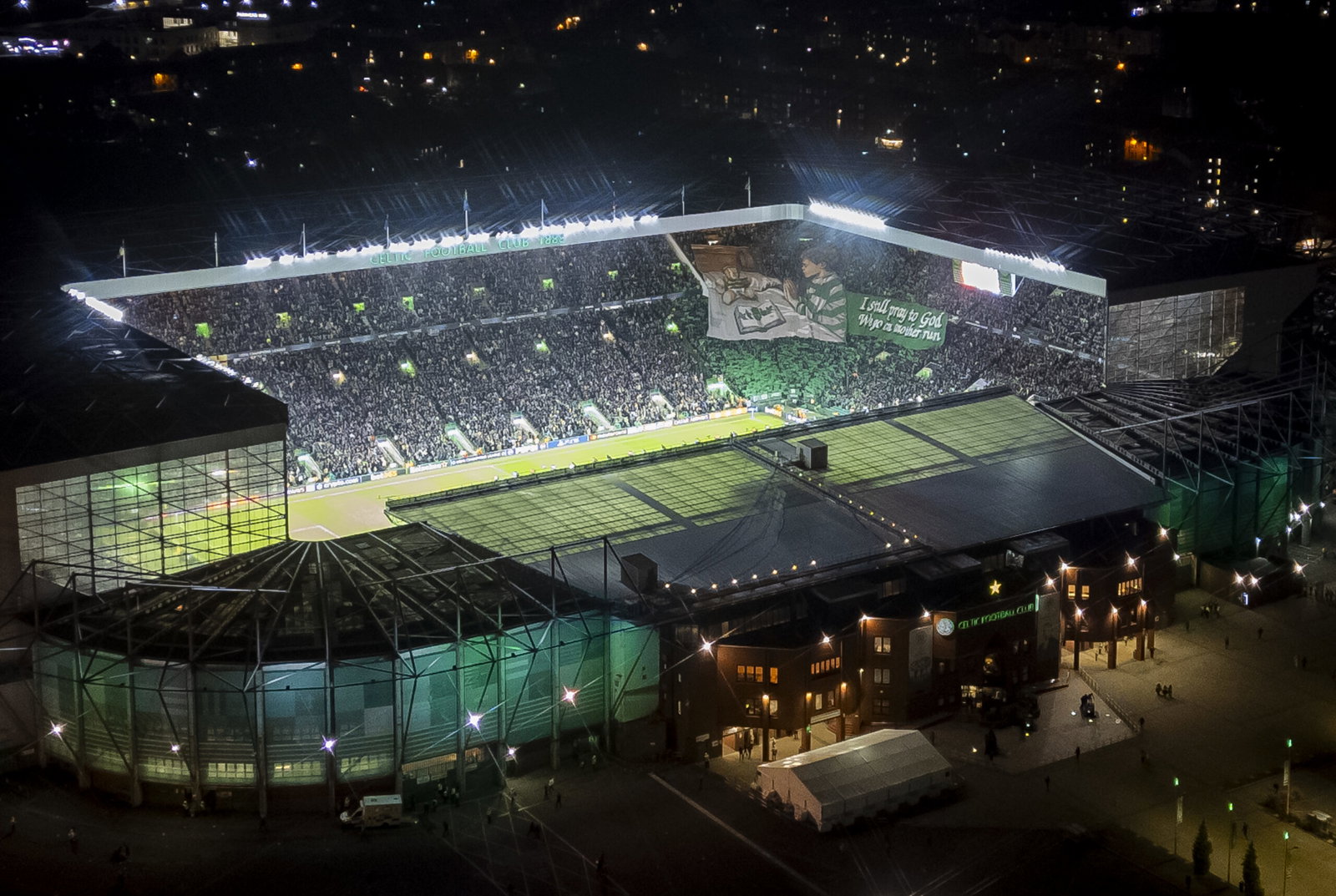
The first demand is for a modernised stadium footprint and a surrounding area worthy of Celtic Park. We all know what that means.
It means improving the ground. It means finally doing something meaningful with the main stand. It means building the museum which has been talked about forever. It means turning the area around Celtic Park into a genuine destination, a meeting place and a social space which feels like the home of a major European football institution.
A few benches outside a snack van are not going to cut it.
Get rid of that ghastly European-night tent where the media and various other guests are expected to rough it. Modernise the exterior.
Give supporters something to do around the ground. Make Celtic Park and the surrounding area something people want to arrive at hours before kick-off rather than somewhere they simply pass through on their way into the stadium.
Most major European clubs understand this already.
Celtic has had millions sitting in the bank which could have been invested in infrastructure, and we have simply not done enough of it.
Tell me where the entitlement is in that.
The second demand is for a coherent global growth plan, and this is something I have been banging my head against the wall about for years.
The example I always use is Paulina, now a fantastic ambassador for Celtic back home in Poland. She discovered Celtic completely by accident.
The club did not go out and find her.
Celtic did not reach beyond Scotland and sell her the story.
If she had not met the right person during her studies, she might never have known much about this club at all. If she had not started reading Celtic blogs and following the club through supporters online, she might never have become the fanatical supporter who came to her first game two years back and immediately fell in love with the whole thing.
Celtic did not create that connection. Supporters did. As usual, the fans are the club’s greatest ambassadors.
And that is a problem because Celtic has an extraordinary story to sell.
This is an institution with a phenomenal history and a culture entirely its own. We emerged from immigration, hardship and the experience of people arriving in a hostile environment and building something for themselves.
That story still resonates. It is hopeful. It is optimistic. It is relevant.
It should be a marketer’s dream.
Instead, we get defeatism from people who tell us that Celtic is competing with the gigantic global brands of the English Premier League and therefore there is only so much room in which we can grow. I think that is garbage.
Nobody is saying Celtic can become Manchester United overnight. The point is that we do not even seriously try to maximise the global appeal we already possess.
We should be finding friends we never knew we had. More importantly, we should be selling Celtic as the friend they never knew they had.
Again, where is the entitlement in that?
The third demand is for clear and honest communication.
I can already hear some of you laughing into your sleeves at that one, because Celtic’s communications problem is now so enormous that it is practically creating its own gravity.
I have written about the club’s perception problem for years, and so much of it begins with an organisation which rarely seems to think it has to explain anything to its own supporters. So, information disappears into a vacuum. People make assumptions. Allegations grow. Rumours spread. The media stirs the pot.
And it is all so stupid and self-defeating.
If Celtic explained how it arrives at decisions, supporters might better understand how we got somewhere and where the club is trying to go next. That does not mean we would like everything we heard. Of course we would not.
But at least we would know.
Instead, when Celtic finally decides to communicate, it too often seems to be because somebody wants to attack supporters. It is ghastly.
And the maddening part is that communication is probably one of the easiest problems at Celtic to fix. Just talk to people. Explain yourself. Treat supporters like adults.
The fourth demand is European-level football ambition.
That does not simply mean wanting better results in Europe. It means European-level thinking. It means wanting something more than staying one point ahead of whichever domestic rival happens to be closest to us.
It means rejecting the defeatism which too often defines Celtic’s thinking, where people build around what they believe we cannot do rather than asking how much more we could achieve if the club was properly structured.
I wrote yesterday about Tony Bloom at Hearts. He does not think that way.
He looks at two much bigger Scottish clubs and thinks that if they are not being run smartly, there is an opportunity for Hearts to bridge the gap by being smarter. That is how ambitious people think. Celtic should be thinking on a far bigger scale.
We are not going to compete financially with Real Madrid or Barcelona. Nobody sensible expects that. But on the right night, we should believe we can bloody the nose of clubs like that. Against clubs of comparable size, we should expect to compete. Against clubs operating on vastly smaller resources, we should not be approaching ties with fear.
And European-level ambition means more than match results.
It means continental coaching. It means elite scouting. It means serious analytics. Sports science. Nutrition. Recruitment structures. It means looking everywhere for the best ideas and the best people instead of filling the club with familiar faces and congratulating ourselves because Barrowfield has had a redevelopment.
This is still a £100 million-plus football business.
Yes, the league we play in limits us. But we have allowed that limitation to become an excuse for thinking small.
Celtic supporters are no longer willing to settle for that.
Nor should they.
The fifth demand is stronger governance and accountability, and after the article I wrote yesterday on our AIM requirements, I would suggest that this one barely needs explaining.
We should never find ourselves in a situation where new directors are appointed to the Board and shareholders are left uncertain about precisely how those appointments were recommended because the published governance information had fallen behind events.
We do not know that anything improper happened. The problem is that poor disclosure creates questions which should never exist in the first place.
Who was on the Nomination Committee? When were they appointed to it? Who recommended the new directors? Was the committee properly constituted throughout?
Those are not conspiracy theories. They are governance questions. And Celtic should be able to answer them easily.
More broadly, we have a club where one non-executive director exercises extraordinary influence over virtually everything, where accountability is difficult to locate and where supporters continually ask who actually makes the important decisions.
Where does Dermot Desmond’s authority begin and end? What authority does Michael Nicholson genuinely exercise? Who carries responsibility when major decisions go badly wrong? When the club releases a moon-howling statement attacking its own supporters, who answers for it?
Too often the answer appears to be nobody.
This may be the most important of all six demands because if you fix governance and accountability, you change the entire mechanism by which the other problems can be solved.
Create proper checks and balances. Make senior people accountable. Recruit on merit. Choose from the widest possible talent pool. Build an institution where people occupy important positions because they are demonstrably capable of doing the jobs.
Do that and a remarkable number of Celtic’s other problems begin to look much easier.
The sixth demand is meaningful supporter engagement, defined as structured, ongoing dialogue which treats supporters as stakeholders rather than an audience.
That should be unarguable. The supporters are Celtic.
We are not simply customers watching a product. We are stakeholders in an institution we sustain emotionally and financially. And yet the contempt with which supporters are sometimes treated is staggering.
Meaningful supporter engagement means recognising why people are angry and asking what might be done differently. It does not mean issuing threatening statements because supporters interrupted some distant billionaire’s golf game.
Nor does it mean refusing to recognise the largest organised assembly of Celtic supporter interests ever brought together and then hand-picking whichever supporters the club would prefer to talk to instead.
The Celtic Fans Collective has elections. It has an executive chosen by supporters. It has representatives from supporter organisations, the Celtic Trust, fan media, the Green Brigade, Bhoys Celtic and other parts of the fan base.
It has working groups. It has structure. It has accountability. It is, in effect, a supporters’ congress. And this is the organisation Celtic refuses to recognise.
Instead, the club appears to prefer engagement on terms which it can control.
But if Celtic gets to choose who represents supporters, then that is not meaningful supporter engagement. It is marking your own homework.
And now that we have gone through all six, look at them again.
Stadium. Growth. Communication. Europe. Governance. Engagement.
Where is the demand for instant gratification? Where is the insistence that Celtic must win every trophy? Where is the demand that supporters pick the team, conduct transfers or take over the Board? Where is the ideological extremism?
It is not there. None of it is there. These are demands for professionalism. Structure. Ambition. Accountability. Growth. Dialogue.
That is why I have such a problem with the “forever war” description.
The easiest way to prove that this does not have to be a forever war is to look at what the protesters are actually asking for. Every one of those six demands contains within it the conditions for ending the dispute.
They are specific. They are measurable. The objective is to get a better football club at the end of this. If the Board chooses to scorch the earth rather than engage, then yes, the dispute could become uglier and last much longer.
But conflict is not the objective. Reform is.
And the media needs to stop writing about the two sides as though they are equally determined to burn the club down merely so somebody can claim victory.
If that analysis is shallow, the idea that all of this will disappear after four or five good results is even worse. That betrays a fundamental misunderstanding of where we are, how we got here and what would actually resolve it.
A winning streak does not build a museum. It does not create a global growth strategy. It does not improve communication. It does not modernise the football department. It does not reform corporate governance. It does not create meaningful supporter engagement.
Results matter enormously.
But these arguments are not about results.
And perhaps those of us advocating change need to accept that we have not hammered that home nearly enough.
Maybe yesterday’s argument about Chris Sutton applies here too. Repetition works.
So perhaps we need to start repeating those six words until everybody knows them.
Stadium. Growth. Communication. Europe. Governance. Engagement.
Every fan site should know them. Every podcast should know them. Every journalist covering this dispute should know them. Nobody should ever again be able to ask, with a straight face, what Celtic supporters actually want.
And nobody should be able to define the movement for us simply because we failed to define it loudly enough ourselves.
I am not asking the Scottish media to sympathise with the Celtic Fans Collective. I am not asking journalists to take our side. I am not asking every Celtic supporter to agree with the Collective or endorse every tactic used by the wider protest movement.
But I am asking people who write about this for a living to understand what they are writing about. Read the programme. Understand the demands. Then criticise them if you want.
Compare what the Collective is proposing with what the people currently running Celtic are offering. That is fair. That is journalism.
What is not fair is reducing an organised reform programme to a tantrum about a handful of football results because that caricature is easier to write.
This is not about entitlement. It is not about spoiled brats demanding trophies. It is not about supporters wanting to run Celtic themselves.
It is about six things.
Stadium. Growth. Communication. Europe. Governance. Engagement.
Six words. Six objectives.
Start talks about one of them. If the board commits to reform, you have six possible routes out of a conflict which does not have to last forever at all.
Choose The CelticBlog as a ‘Preferred Source’ on Google News for quick access to the news you value.







Very good article…My sadly simplistic view on the situation, is, however…None of these objectives will be achieved while DD and his sycophants are in control….They have proved,time and time again, that’s it’s their way .. or the highway…and I don’t see that changing…We badly need new people,who genuinely care about our future, to step up and sweep the dross away…and I hope,with all my heart, that something is going on in the background.
Off topic…but…does anyone know if MON and SM have had a fall out…I thought their lack of interaction against Motherwell was noticeable…Both at goals scored and full time…there was no contact…Or have I got it wrong?
James,
Excellent piece as always, but I have to disagree on one point (sorry).
“millions sitting in the bank which could have been invested in infrastructure”, that’s not going to happen, nor should it IMHO.
Capital expenditure should be funded by long term loans, paid down each year over a period OR funded (possibly in part) by a Debenture or Share scheme.
Just my 2 pence worth.
Keep up the good work.
Hail Hail.
The ONLY solution is for the current board and particularly Desmond to be replaced, and not by Nepo babies or cronies.
Good article James, six reasonable objectives that any sensible board could accomodate .
Treat their supporters as the intelligent people that most of the Celtic support are, start with Communication, then Engagement and the other four can follow on over time.
Should be easy, but Desmond has proved to be an obstinate guy, who doesn’t seem to recognise the meaning of the words, conciliation and cooperation.
Great article James. I just wonder if DD had those sort of objectives in mind when he first got involved, but wanted to implement them in the English Leagues.
I’m not sure of the timeline, but did his enthusiasm for growth diminish when he realised Celtic would be staying in Scotland?
Good stuff JF.
How many times do we see wee teams in Europe with a fifth of our resources get further than us ?
How are DD etc not embarrassed by this ?
If you or I seen this repeatedly happen to the club we love it would become a personal special project to solve and rectify, so how come they don’t ?
This club needs a major upgrade throughout.
This is exactly what I don’t understand about DD. Not only him being a fan and seeing the continual lack of progress on the pitch in Europe, but also as a businessman with a focus on the P&L. Surely he can’t be happy to look at our wage bill and then see us continually struggling against European teams who spend a fraction of what we do on wages. To see teams with 10,000 or 20,000 capacity stadiums being technically superior, better coached and very often looking much fitter. With that lens on it you would be asking questions as to what you are getting for your money? I would hazard a guess that of all the clubs that took part in qualifying for the CL this season and those that qualified automatically, that our wage bill would put us comfortably inside the top 36 clubs.
If DD is not for selling we need someone to get in his ear and convince him that with proper management throughout the club his investment could be doing a heck of a lot better both on and off the pitch.
James Just checked a few scores
Champions league
LASK 3-6 Liverpool
Viking 2-2Bayern Munich
Do you think the CEO’s of Viking and LASK get paid the equivalent of £800K+ ?
Like MUTE MIKE?
Or their respective chair Person
£500k+
Like weasel WEASEL WILSON?
I would suspect that Martin, Malone and FOZZY are getting substantially more compensation. than there equivalents at both LASK and Viking!
I would say probably nowhere near the amount CELTIC shell out.
Both very small fish in the big pond.
All Celtic fans need to ask is are we getting value for money in the management of our club?
We are living of past glories build and the muppets in the boardroom are paying themselves way over the top for the results they produce.
This culture was set in train by LAWWELL .He too milked the coffers and then got out when the temperature got to hot!
I remember when Kenny Dalglish transferred to Liverpool for a record fee £400K.
The journalists asked Liverpool about how much Kenny was being paid.
The answer was.This is confidential but to give you an idea it takes the first 16,000 who come through the turnstile just to pay Kenny’s weekly wadge.
CELTIC fans need to calculate how many bums on seats dose it take to pay the weekly wadge for MUTE MIKE, WEASEL Wilson, Martin Malone and FOZZY.
The figures at LASK and Viking would be a very small fraction I would bet!
How come our results in Europe are piss poor?
Our Board are fish out of water…Haven’t a clue about football…Not a clue.