
There was something about the North Curve’s statement this morning that I found particularly refreshing. I agreed with every single word because it demonstrated something that has been painfully absent from Celtic Football Club’s leadership for far too long.
Conviction.
A willingness to stand behind your position, explain why you’ve taken it and accept that there might be consequences.
Imagine that.
The North Curve have announced their withdrawal from the Home Cup Ticket Scheme. They won’t attend Celtic’s remaining home Europa League fixtures, nor will they attend Scottish Cup matches, whether at Celtic Park, away from home or potentially at Hampden.
They have made their position clear and have explained their reasons in detail. Also, they been very careful to emphasise that they are not attempting to pressure anybody else into following their example.
And I respect that enormously.
Because while the North Curve have made a decision that will undoubtedly involve personal sacrifice, the people running Celtic Football Club seem determined to continue their preferred approach of issuing statements, disappearing from public view and leaving somebody else to deal with the consequences.
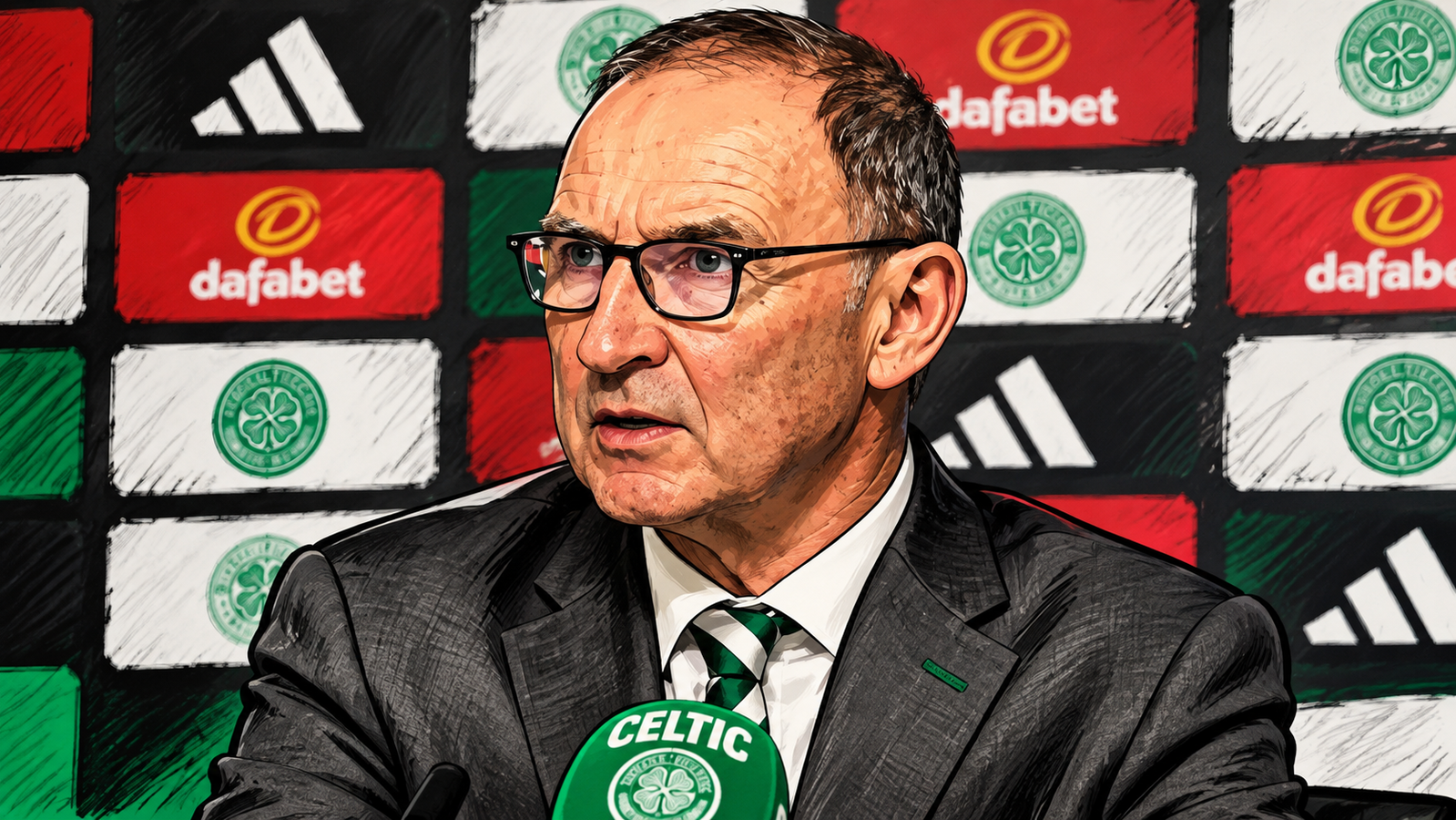
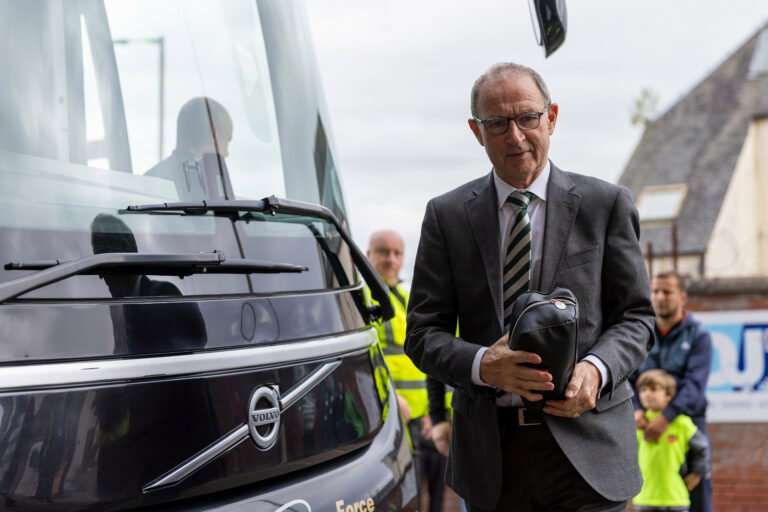
Unfortunately, that somebody else is now Martin O’Neill.
At The Behest Of Desmond
One particular phrase in the North Curve statement caught my attention.
“At the behest of Desmond.”
I thought that was absolutely spot on.
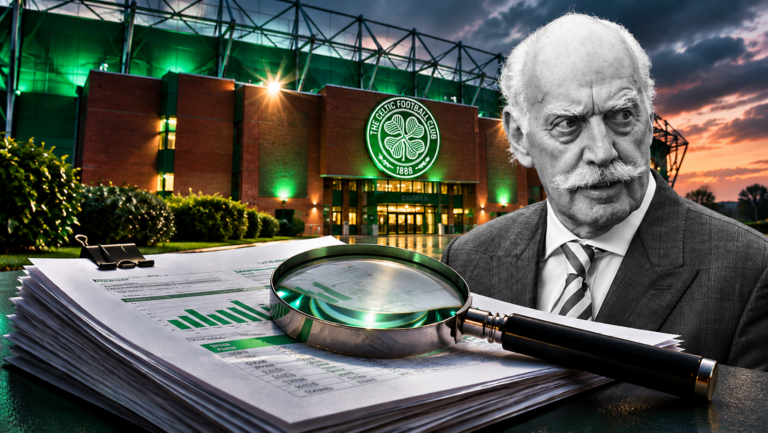
The group believes Celtic’s extraordinary statement following the protest at St Andrews was issued at Dermot Desmond’s behest.
I understand precisely why the North Curve have chosen to put Desmond’s name at the centre of their response.
Celtic’s official statement specifically brought the Green Brigade into the dispute surrounding the Celtic Fans Collective and the protest at St Andrews.
The North Curve have responded by bringing Desmond directly into the argument.
Fire with fire.
And, frankly, I admire it.
For years, we’ve watched a situation develop where Dermot Desmond appears to exercise enormous influence over Celtic Football Club while remaining remarkably detached from the responsibility of explaining its decisions to supporters.
He is Celtic’s principal shareholder, not its outright owner. That’s an important distinction.
But nobody seriously questions that he is an enormously influential figure in the club’s affairs.
And influence should come with accountability.
If Celtic’s board is prepared to make serious public accusations against supporter organisations, those organisations are entitled to challenge the people they believe are responsible.
The North Curve have done precisely that.
They have also denied responsibility for the St Andrews protest while expressing support for those who carried it out.
Whether people agree with that protest or not, the distinction matters.
The club made its allegations. The North Curve have answered them.
I would dearly love to see Celtic’s leadership demonstrate the same willingness to engage in public.
Imagine The Empty Seats At Hampden
The decision to withdraw from cup matches is significant.
I think some people might be underestimating just how significant.
There will undoubtedly be supporters who disagree with the boycott. Some will argue that Celtic should always be supported, regardless of who occupies the boardroom.
That’s their right.
The North Curve have explicitly recognised that supporters must make their own decisions.
But here’s the thing.
They don’t need to tell anybody else what to do for their actions to influence others.
Supporters can see what is happening. They can examine the reasons behind the decision and reach their own conclusions.
And I suspect a considerable number will.
Imagine Celtic reaching a Scottish Cup semi-final at Hampden.
Finding yourself then looking around the stadium and seeing substantial pockets of empty seats where supporters would ordinarily be desperate to attend.
Imagine that sight being broadcast across the country.
What a damning illustration that would be of the direction in which this football club is heading.
Of course, we don’t yet know how many supporters will join the boycott. Nobody should pretend that empty sections at Hampden are guaranteed.
But the possibility itself ought to concern Celtic’s leadership.
This is a club whose support has travelled extraordinary distances, spent extraordinary amounts of money and followed the team through good times and bad.
For supporters to reach the point where they voluntarily decide not to attend major cup matches should set alarm bells ringing throughout Celtic Park.
And the consequences might extend beyond Hampden.
European nights have long been central to Celtic’s identity. The atmosphere, the noise, the sense of occasion. These are things the club rightly celebrates whenever it wants to promote itself to the wider football world.
What happens when supporters begin withdrawing the very atmosphere Celtic loves to advertise?
What happens when the club discovers that loyalty cannot simply be taken for granted?
The North Curve have made a choice.
Others might make the same choice independently.
And that is precisely why I think this decision has the potential to become something much bigger.
Dermot Desmond Is Misjudging The Mood
I cannot escape the suspicion that Dermot Desmond believes the current opposition to Celtic’s leadership comes predominantly from a relatively small, noisy section of the support.
He sees the Green Brigade, the North Curve and the Celtic Fans Collective as the principal sources of irritation.
I am convinced he believes that, without those organisations, the overwhelming majority of Celtic supporters would simply carry on as normal.
And if that truly is his assessment, I think he has miscalculated spectacularly.
The discontent is far more widespread than one supporters’ group.
You hear it in conversations before matches, across fan media. You hear it from supporters who have never stood in the North Curve and have absolutely no intention of joining an organised protest.
There are lifelong Celtic supporters who are thoroughly fed up with the lack of communication, the apparent absence of a coherent long-term football strategy and the repeated failures to build upon periods of domestic success.
Some disagree with the tactics of the Collective. Others have reservations about the Green Brigade.
But that doesn’t mean they are happy with the board.
That distinction is enormously important.
The club cannot simply assume that opposition to particular protest methods amounts to support for the current leadership.
Nor can it assume that criticising supporter organisations will make the wider dissatisfaction disappear.
The North Curve’s decision might well demonstrate just how mistaken that assumption would be.
The Board Disappears And Martin Takes The Questions
Now we come to the part of this entire episode that has annoyed me most.
Following Celtic’s lengthy statement on Saturday evening, I feared exactly what would happen next.
And, predictably enough, it has happened.
Nobody from the club’s senior leadership has publicly appeared in front of the cameras to explain that statement in the way supporters deserve.
Instead, Martin O’Neill has been left answering questions about the protest, the supporters and the continuing confrontation between the club and its own fanbase.
How utterly predictable.
Celtic’s boardroom produces a statement of extraordinary seriousness, involving allegations against supporters and the termination of formal engagement with the Celtic Fans Collective.
And who gets to deal with the fallout?
The football manager.
A man whose immediate responsibilities should involve preparing Celtic for Motherwell on Sunday, finding solutions to the team’s tactical problems and attempting to restore confidence after three consecutive defeats.
Instead, he is dragged into a dispute that should be addressed by the people responsible for running the club.
I find that disgraceful.
It is spineless leadership.
If you believe your statement was necessary, explain it.
When you are prepared to accuse supporters of bringing shame upon Celtic, surely you should also be prepared to stand in front of those supporters and explain precisely what you mean.
But no.
We have a chief executive who rarely offers meaningful public communication and an interim chairman who, in my opinion, has been given more than enough opportunities to demonstrate that Celtic’s approach to supporter engagement is changing.
Brian Wilson was supposed to represent an opportunity for a fresh start.
“One more chance” face.
Instead, we’re witnessing the same old communication problems, with another manager left to absorb the criticism.
Martin O’Neill should not be Celtic’s unofficial spokesperson on every contentious boardroom decision.
He is the manager of the football team.
That ought to be enough.
Martin, Seville Was About More Than The Supporters
I will never forget what Martin achieved at this football club, and I take absolutely no pleasure in criticising him.
But I cannot agree with his comments about what represents Celtic.
Speaking about the St Andrews protest, Martin described the behaviour as not being Celtic and invoked the extraordinary support that travelled to Seville in 2003.
“That’s Celtic”….
He is entitled to that opinion.
And he is absolutely right to celebrate the Celtic support who travelled to Seville.
Those supporters were magnificent.
Tens of thousands travelled across Europe, many without tickets, to follow their team to a UEFA Cup final.
It was an extraordinary demonstration of loyalty and passion.
But Martin, can I remind you of something?
There was another reason Celtic supporters were united in Seville.
The football team.
That was Celtic too, Martin.
That team represented everything I wanted my football club to be.
Ambitious. Competitive. Fearless. Organised. Capable of looking major European opponents in the eye.
The supporters in Seville were magnificent because of who they were.
But the team on the park gave them something extraordinary to unite behind.
You cannot celebrate one part of that story while overlooking the other.
And I think Martin has walked straight into a spectacular own goal by using Seville as the benchmark for what Celtic should represent.
Because I agree with him.
I remember Seville and exactly what Celtic looked like.
And when I compare the ambition, direction and European competitiveness of that era with what we’re witnessing today, I find myself asking some deeply uncomfortable questions.
Where has that ambition gone?
Why have we repeatedly failed to prepare properly for European qualification?
Why do we have such enormous resources compared with our domestic competitors, yet continue to find ourselves discussing the same structural shortcomings?
Those are legitimate questions.
And they don’t become illegitimate because some supporters have chosen protest methods that Martin personally dislikes.
The Celtic support deserves respect for what it has contributed over generations.
But supporters are also entitled to expect the people running the club to uphold their side of that relationship.
Seville wasn’t simply a celebration of unquestioning loyalty.
It was a celebration of what Celtic Football Club could achieve when an ambitious football team and an extraordinary support came together.
That is the Celtic I remember.
And I would dearly love to see it again.
Martin Has My Sympathy, But He Hasn’t Helped Himself
I do have sympathy for Martin O’Neill.
Quite a lot of sympathy, actually.
He should never have been placed in this position.
But I also think he has made a mistake.
His comments will understandably upset supporters who feel they have spent years watching the club drift away from the standards they expect.
And those supporters are perfectly entitled to challenge him.
Martin cannot invoke Celtic’s history and then expect everyone to accept his interpretation without question.
For me, the Seville comparison opens a much wider debate about what Celtic represents, both on the terraces and on the football pitch.
And I don’t think that debate necessarily helps the argument he was trying to make.
However, there is another uncomfortable truth.
Martin returned to Celtic with his eyes open.
He knew the environment he was walking into.
He only had to look at Brendan Rodgers during the previous season to see what happens when Celtic’s senior executives refuse to communicate properly.
Rodgers repeatedly found himself answering questions about recruitment, the board and matters beyond his immediate responsibility as manager.
It became a familiar and deeply frustrating pattern.
And now Martin is experiencing something remarkably similar.
When the chief executive remains largely silent and the chairman fails to provide the public leadership supporters expect, the manager becomes the easiest person to question.
So the questions inevitably land at his feet.
And sooner or later, particularly when emotions are running high, something will be said that creates another controversy.
Martin’s comments are his responsibility.
But the circumstances that placed him in that position are the responsibility of Celtic’s leadership.
Both things can be true.
The North Curve Have Shown More Conviction Than The Boardroom
What makes this situation particularly remarkable is the contrast between the two sides.
The North Curve have publicly explained their grievances, announced a course of action and made clear that they will review their position if sufficient progress is achieved.
They have also made clear that other supporters are free to make their own decisions.
You can agree with them or disagree with them.
But you know where they stand.
Can anybody honestly say the same about Celtic’s leadership?
What is the long-term plan?
How does the club intend to rebuild trust?
Who is taking responsibility for the deteriorating relationship with supporters?
Why was such a serious statement issued without a senior executive subsequently explaining it in public?
And how does Celtic intend to move forward when significant sections of its support feel increasingly alienated?
These questions are not going away.
They certainly won’t disappear because the board has decided it no longer recognises the Celtic Fans Collective.
The club can withdraw from formal engagement with an organisation.
It cannot withdraw the right of supporters to be unhappy.
And it cannot dictate how every supporter chooses to express that unhappiness.
The North Curve’s boycott represents another development in a dispute that Celtic’s leadership seems incapable of resolving.
It might inspire others to follow.
It might not.
But either way, it should be taken seriously.
Because the relationship between Celtic and its supporters is not some minor public relations inconvenience.
It is fundamental to the identity of the football club.
This Is About Much More Than One Protest
I don’t want to see Celtic supporters fighting among themselves.
No one wants to see Martin O’Neill’s extraordinary legacy damaged by a boardroom dispute that should never have become his responsibility.
And I certainly don’t want to see empty seats at Hampden or European nights stripped of the atmosphere that makes Celtic Park special.
But I understand why supporters are reaching the decisions they are reaching.
I understand the anger.
And I understand why the North Curve believe meaningful change now requires sacrifice.
The responsibility for resolving this situation cannot rest solely with the people standing on the terraces.
It must also rest with those occupying the boardroom.
Celtic’s leadership has spent years benefiting from the loyalty, commitment and financial contributions of an extraordinary support.
That loyalty deserves more than silence.
And it deserves a football club whose actions match the standards its supporters have upheld for generations.
Martin O’Neill remembers Seville.
So do I.
But I remember the team as vividly as I remember the supporters.
I remember a Celtic Football Club that gave us genuine reasons to believe we could compete with some of the best in Europe.
And that is the most important point in all of this.
The North Curve are not asking for Celtic to become something unrecognisable.
Neither are the thousands of other supporters demanding better.
They want a Celtic Football Club that lives up to its potential.
I don’t think that is unreasonable.
I think it is the very least we should expect.
And until those responsible for running Celtic begin to understand that, no amount of statements, condemnations or carefully worded appeals for unity will make this problem disappear.
The North Curve have made their position clear. Martin O’Neill has been left to explain himself.
Now it’s time for the people who actually run Celtic Football Club to find the courage to do the same.

Applause!
Great article Bhoycie, very well put and, I think, someone the majority would agree with.
SomeTHING not someONE. Stupid autocorrect
Thanks very much mate
Brilliant
Some man, thanks for reading and the positive feedback
Great article Bhoycie I hope loads of people agree.
I,to my sorrow will not be back at Celtic Park until this shitshow of a board are gone.At the age of 76 and supporting this magnificent club since my first game at the age of 4. I have had enough.I have been there through the good times and the bad times,through protests and all,followed everywhere from Lisbon to Leeds ,from Milan to Motherwell, from Seville to Station Park Forfar and here we are in a state I never ever thought this great club would be in. I have never been so sad to have to take this stand but here we are. I know I,by myself will not make a great deal of difference as my money for my ST has been paid but I finish with tears in my eyes writing this.
Hail! Hail!
Agree with every word Neo, I’m 82 years old still lucky enough to be healthy enough to watch Celtic, but I’ll be following the GB in their boycotts.
Watched my first game as a six year old, this is the saddest period in all that time, Desmond and his board have broken the club, it will eventually be repaired, but Desmond is the type of guy who will prolong our misery as long as possible.
This season is more or less over, MON is just like Nicolson and McKay a guy doing Desmonds bidding. We hoped this Board would get its act together, especially in communicating with the supporters as to a plan to take this club forward, but no, the only communicating they do well is when slagging the fans.
It’s a disaster for our football club, I’m afraid I don’t see any way for this club to come together in common cause. This Board had their chance at the end of last season to “seize the day”, they failed that test, it should have been easy, but with this board nothing comes easy, common sense is always trumped by the ego in Ireland.
It’s sad for us all, and should have been avoided, in three weeks time this club will be in a terrible shape.
I know micmac , a sad time for all of us auld timers ,going to see Celtic is/was my whole passion in life ,even got married on a Friday so as not to miss a game…so sad
A fair article Bhoycie. A few things though. This is not like last year. The GB is a minority of the north curve. The north curve contains many others including the bhoys and many who are not in the ultras group. I expect the entire section to stand by this but the tickets will now be on sale for anyone. Im not a great fan of much of the ultra stuff but at least they are showing solidarity.
It will be interesting to see the attendance at the Celta Vigo game now. Remember you predicted 1000s of empty seats for the last game.
The collective have kept schtum about this. I think they should make a statement also. Do their members want to take part in this? It would be a massive show of togetherness and could bring the regime down quickly if so.
Lets go back to Seville now. The Celtic team of 2003 were knocked out of the UCL in a 2 leg tie v Basel, then progressed to the UEFA cup final. The team that season won absolutely nothing.
I entirely agree that side is light years ahead of the present side but they weren’t a UCL side either.
We have it within our hands to get rid of the board, the manager and DD before Christmas….but we probably need the football side to seriously fail to make that happen along with the stands being empty. I think the north curve giving the green light for everyone to turn up for league games only prolongs things, especially if we win our next 3 games.
We really need the team to collapse to achieve rapid change….the fans will need to make massive sacrifices and it will happen. This is a start.
I think the pressure on DD will need to come from the other major shareholders and specifically for them to stand up to DD and take the Club in a different direction. Whether these shareholders will respond to current events and planned boycotts we will soon find out. I think it more likely that DD would sell up or at least reduce his stake if he were being ignored/out-voted on a consistent basis.
I am genuinely surprised that Lindsell Train, Chris Trainer and James Keane appear to be so passive in the face of what has transpired over the last 18 months or so.
If DD could be sidelined and take a role as a silent/passive investor, and with his declared Celtic supporter interest, he could act as an effective bulwark from unwanted takeover approaches.
We desperately need the circa 20% of shares in the hands of ordinary fans to become organised and champion changes in our executive management. And we need those who are relied upon to buy hospitality packages and boxes to start asking questions and make the padded seats feel less and less comfortable for the board.
First class article Boycie.
I haven’t met a Celtic fan who isn’t raging with this board and want big changes. Sacrifice unfortunately is necessary after the disgusting statement last Saturday.
Well played NC !
Support the green Brigade, the Bhoys and the collective and get this sorted once and for all.