
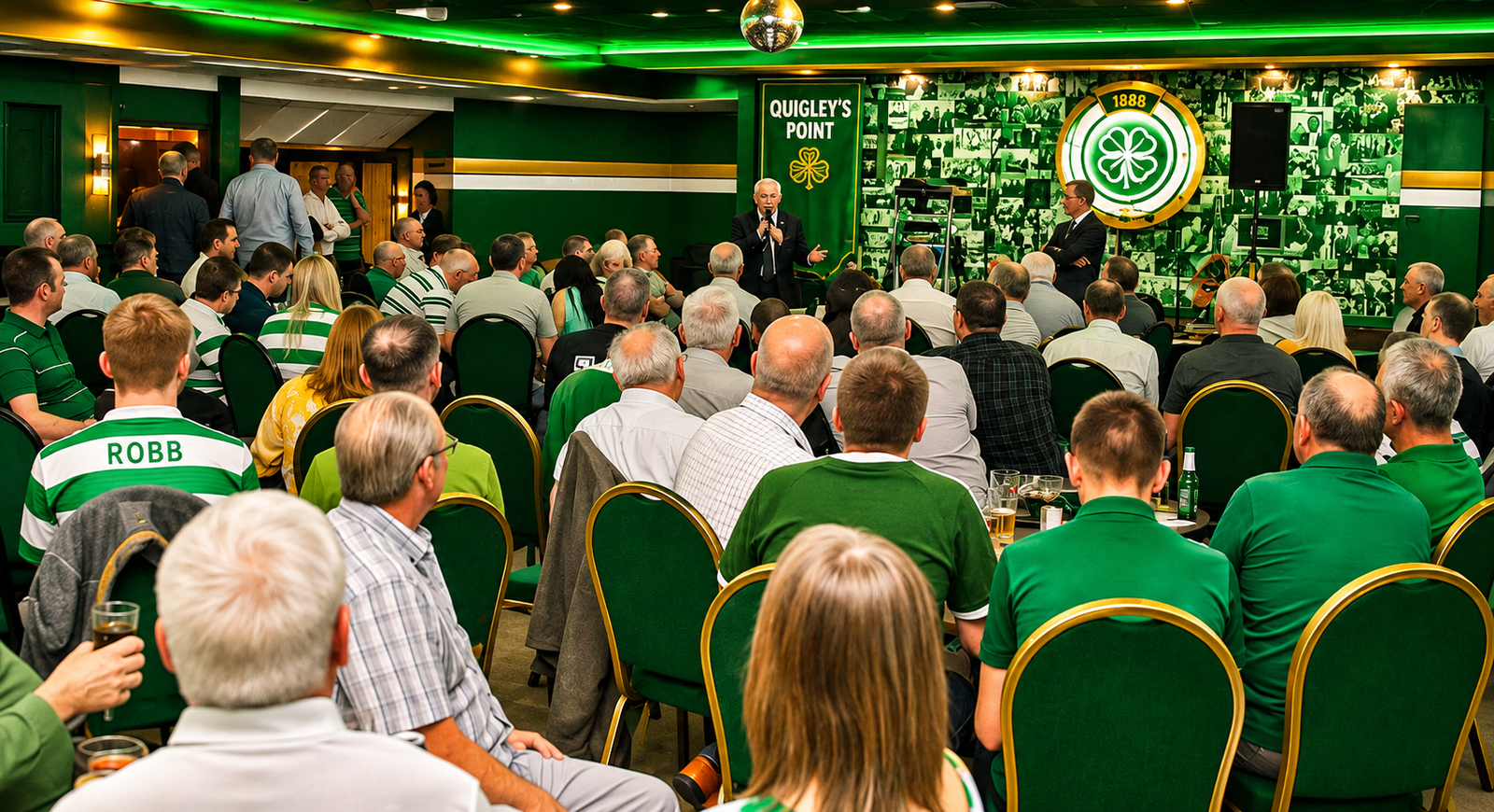
Celtic’s latest attempt at supporter engagement has certainly got people talking. Unfortunately, much of that conversation seems to concern who received an invitation rather than what actually happened inside the room.
And if the intention was to bring the Celtic support closer together, I’d suggest they’ve already failed.
Then again, perhaps we shouldn’t be surprised. This Celtic board has become remarkably accomplished at creating division among the very people who should be united in demanding better.
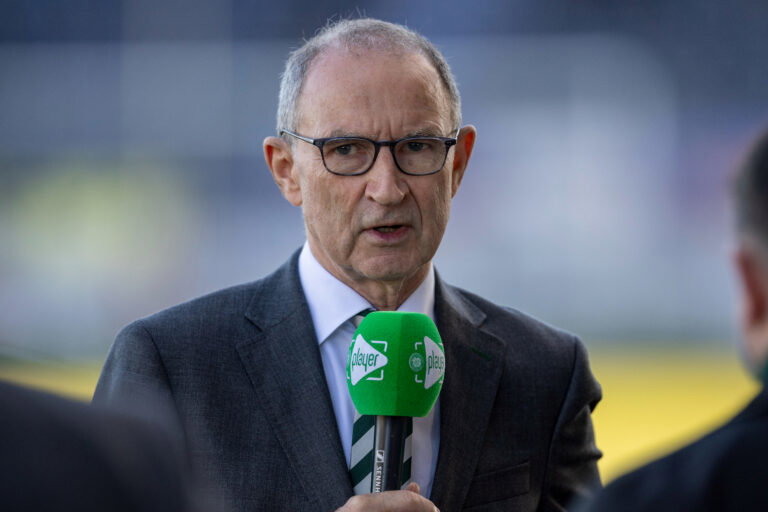
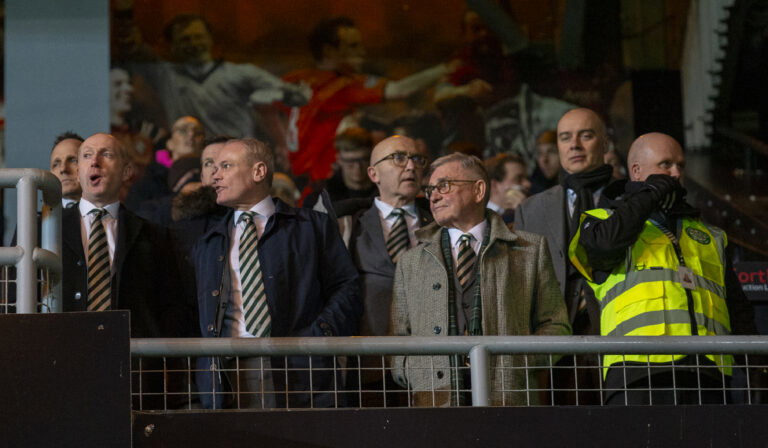
Monday evening’s meeting at Greenock Celtic Supporters’ Club brought around 120 supporters face-to-face with Brian Wilson, Michael Nicholson, Chris McKay and, somewhat unexpectedly, Martin O’Neill.
Two and a half hours of questioning followed.
On paper, that’s progress. Supporters have demanded better communication, and senior figures have made themselves available to answer questions.
Surely that’s something we should welcome?
Well, yes. At least in principle.
But with this Celtic board, there’s always another question worth asking.
What exactly has changed?
The Damage Was Done Long Before Greenock
I haven’t suddenly developed concerns about Celtic’s board because of a disappointing season, a failed transfer window or an embarrassing result.
I’ve been questioning their competence, ambition and accountability for years.
Frankly, I don’t believe the people running Celtic consistently meet the standards their positions demand, never mind exceed them.
Their handling of recruitment, their relationship with supporters and their repeated inability to communicate honestly and effectively have convinced me that fundamental change is required.
And here’s the uncomfortable question.
What could Michael Nicholson or Brian Wilson realistically have said in Greenock that would have satisfied me?
I’m struggling to think of anything.
Another promise to improve communication? Heard it.
Another assurance that everyone wants what’s best for Celtic? Wonderful.
Yet another commitment to learning lessons? How many lessons does one board need before somebody questions whether they’re capable of learning?
The damage is done.
Trust isn’t restored through a couple of hours of conversation. It’s restored through accountability, competent decision-making and evidence that those responsible understand why supporters have lost confidence.
Until that happens, meetings are simply meetings.
Some Supporters Need To Leave Their Egos At The Door
However, there’s another aspect of this meeting that I find particularly amusing.
The reaction from certain corners of the Celtic support.
We’ve spent months demanding that the club communicate more openly. Supporters’ groups, fan outlets, podcasts and individuals have repeatedly insisted that the board must engage.
Then a meeting happens, and suddenly there’s frustration about who knew beforehand and who received an invitation.
Forgive me, but are we demanding better communication or demanding a place on the guest list?
Because those are two very different things.
Some reactions give the impression that being left out of the loop is almost as offensive as the board’s actual failures.
I’m not interested in naming outlets or individuals. That’s not the point.
But there’s a warning here.
Don’t allow your own importance, or your perception of it, to become more significant than the cause you’re supposedly fighting for.
Celtic don’t need to provide every podcast, website or prominent supporter with advance notice of every conversation.
If the club wants to visit a supporters’ club in Greenock and answer questions, let them.
In fact, encourage them.
Let them visit supporters’ clubs across Scotland, Ireland and beyond.
The criticism should concern what they say, what they refuse to answer and whether anything meaningful follows.
Not whether somebody feels left out of the party.
The board hardly needs help dividing Celtic supporters. We shouldn’t be volunteering to do the job for them.
Divide And Conquer – Or Just Another Tick-Box Exercise?
Of course, none of that means I’m suddenly convinced Celtic have turned over a new leaf.
Quite the opposite.
I suspect the board understands exactly how valuable these carefully contained conversations can be.
A relatively small audience, a familiar environment and a hugely popular manager alongside the executives.
It’s about as comfortable a setting as Celtic’s leadership could reasonably hope for during such a turbulent period.
That doesn’t mean the supporters went easy on them. Brian Wilson himself acknowledged that the questioning was difficult.
But the board can now point towards another example of engagement.
Another meeting completed.
A few more boxes ticked.
Another statement about listening.
Meanwhile, the wider support remains largely unaware of the substantive answers provided.
And that’s where Celtic undermine their own argument.
If you’re genuinely proud of facing difficult questions, why not tell everyone what those questions were and how you answered them?
Why should supporters depend on individual recollections and social media accounts to understand what their club’s leadership has said?
Communication isn’t simply about getting people into a room.
It’s about ensuring the information travels beyond it.
Without that, even a genuinely constructive meeting risks becoming another public-relations exercise.
What If It Really Is A Step Forward?
I can already hear the argument.
Surely any improvement in communication deserves recognition?
And yes, it does.
If Celtic intend to make these meetings regular, accessible and meaningful, I’ll welcome that development.
I don’t need to attend personally. Nor do I need to know about every meeting before it happens.
What I need is evidence that the people running Celtic are listening and, crucially, acting.
The problem is that years of disappointment have left me with very little confidence that meaningful change will follow.
Perhaps I’m wrong.
Perhaps Greenock will eventually be remembered as the beginning of a healthier relationship between Celtic and their supporters.
I’d love that to be the case.
But I’m not about to mistake a conversation for a transformation.
Celtic Supporters Must Not Lose Sight Of The Real Problem
Ultimately, the Greenock meeting has exposed two separate problems.
The first is a board that continues to struggle with transparency and accountability.
The second is a support that risks becoming distracted by internal arguments about access, influence and who gets to speak for whom.
Neither helps Celtic.
Martin O’Neill deserves the opportunity to meet supporters without every appearance becoming another political battleground.
Likewise, supporters who attended Greenock deserve credit for asking questions, not criticism for accepting an invitation.
But the people running Celtic must understand that the relationship cannot be repaired through carefully worded statements and promises of future engagement.
They’ve had years to demonstrate their capabilities.
For me, they’ve fallen well short.
And while Martin O’Neill might be the greatest frontman Celtic’s board could ever wish for, even he cannot keep covering for their shortcomings indefinitely.
The real test of Greenock isn’t who was invited, who felt excluded or how well Martin O’Neill handled the room.
It’s whether anything actually changes.
And until it does, Celtic’s board can hold as many meetings as they like.
I’ll still be asking exactly the same questions.




Really enjoyed the article, I completely agree with you. The common goal of a better Celtic must remain the biggest priority.